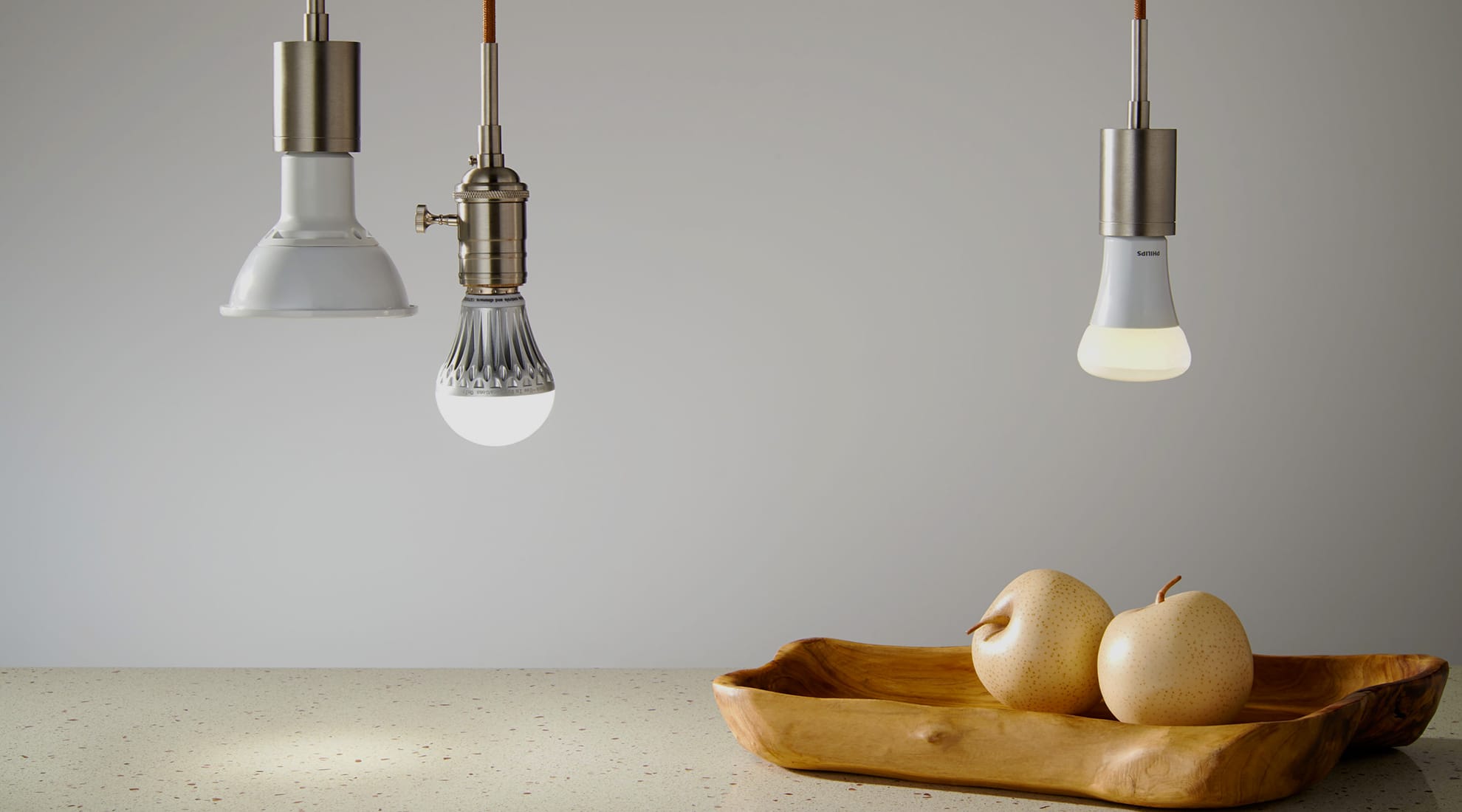
 SoCo Modern Socket Pendant by Visual Comfort Modern
Why Lumens Matter More Than Watts
For most of the 20th century, watts were our shorthand for brightness. A 60-watt bulb was a known quantity — reliable, familiar, easy to shop for. But that logic only held because nearly every bulb on the market was an incandescent, and they all converted energy to light at roughly the same inefficient rate. Modern LED light bulbs changed everything. They produce the same amount of visible light using a fraction of the energy — which means a 10-watt LED can outshine a 60-watt incandescent. Suddenly, watts became a measure of energy consumption, not brightness. That’s where lumens come in. A lumen is the unit of measurement for the total amount of visible light a bulb emits. It’s a direct, honest measure of brightness — no conversion required. More lumens means more light, full stop. More lumens = brighter light.Lumens vs. Watts: A Simple Breakdown
Think of it this way: watts tell you how much energy a bulb uses to do its job. Lumens tell you how well it actually does that job. With energy-efficient lighting, those two numbers have become almost entirely decoupled — and that’s a good thing for your electricity bill.- Lumens measure actual brightness — the light you see.
- Watts measure energy consumed — the cost to run it.
Lumens to Watts Conversion Chart
If you’re replacing older bulbs and want to match the brightness you’re used to, this chart is your cheat sheet. Use it as a starting point when shopping for your next ceiling light, table lamp, or pendant light fixture.| Incandescent Wattage | LED Equivalent Wattage | Lumens (Brightness) |
| 100W | Up to 22W | 1600 lumens |
| 75W | Up to 20W | 1100 lumens |
| 60W | Up to 12W | 800 lumens |
| 40W | Up to 9W | 450 lumens |
How to Read a Light Bulb Label
Updated lighting regulations introduced a new label format — the Lighting Facts label — designed to give you everything you need at a glance. It’s modeled after the nutrition label on food packaging, and once you know how to read it, it’s genuinely useful.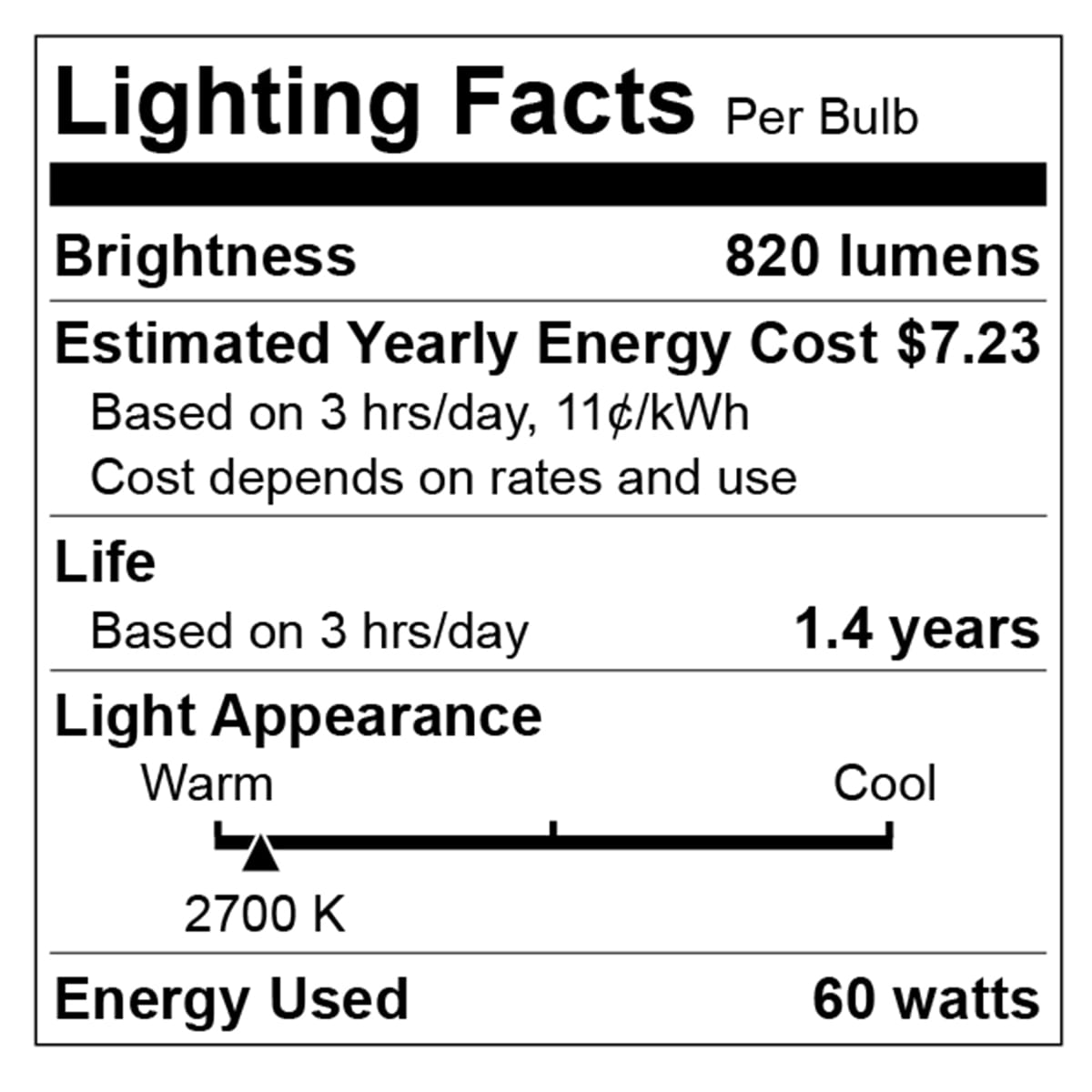
- Brightness: Listed in lumens. This is the number to focus on when comparing bulbs.
- Estimated Yearly Cost: Based on average daily usage — helpful for understanding the long-term value of a more efficient bulb.
- Life: The expected lifespan, typically expressed in years based on standard daily use. LED bulbs often last 15–25 years, which is a significant difference from incandescent.
- Light Appearance: This is color temperature, measured in Kelvin (K). It ranges from warm, amber-toned light at the lower end to crisp, bluish daylight at the higher end.
- Energy Used: The actual wattage the bulb consumes — useful for calculating energy costs.
How to Choose the Right LED Bulb for Your Space
Knowing what lumens are is the foundation. Knowing how to apply that knowledge to your actual home is where things get interesting. Here are the key factors to consider before you buy.1. Lead With Lumens, Not Watts
This is the single most important shift in mindset. When replacing an old bulb, match the lumen output — not the wattage. A 1100-lumen LED replaces a 75W incandescent. A 450-lumen LED replaces a 40W. Start there and you’ll never end up with a room that feels unexpectedly dim or harshly bright.2. Choose the Right Color Temperature
The color of light has an enormous impact on how a space feels — arguably as much as the fixture itself. Getting this right is one of the most underrated decisions in interior lighting.- Warm White (2700K–3000K): Soft, amber-toned, and inviting. The classic choice for living rooms, bedrooms, and dining spaces where you want warmth and comfort.
- Neutral White (3500K–4100K): Clean and balanced. Works beautifully in kitchens, home offices, and utility spaces where clarity matters.
- Daylight (5000K+): Bright and energizing, with a blue-white quality. Best reserved for task lighting, garages, or spaces where you need sharp visibility.
3. Check the Color Rendering Index
CRI measures how accurately a light source renders colors compared to natural daylight, on a scale of 0 to 100. A bulb with a CRI of 80 or above is considered good for most home applications. For spaces like bathrooms, kitchens, or art-filled rooms where color accuracy really matters, aim for a CRI of 90 or higher. The difference is genuinely visible — and once you notice it, you can’t unsee it.4. Look for the ENERGY STAR® Label
When in doubt, reach for an ENERGY STAR-certified LED bulb. That certification is a reliable indicator of quality, efficiency, and longevity — it means the bulb has been independently tested and verified to meet rigorous performance standards.5. Consider Dimmability
Not all LED bulbs are compatible with dimmer switches, and using a non-dimmable bulb on a dimmer circuit can cause flickering or shortened bulb life. If your fixture is on a dimmer — or if you’re planning to add one — look specifically for bulbs labeled as dimmable. Pairing the right bulb with a quality dimmer gives you incredible control over the mood and atmosphere of a room.Why the Shift to Energy-Efficient Lighting Is Here to Stay
Incandescent bulbs are remarkably inefficient — they convert the vast majority of their energy into heat rather than light. Updated federal energy regulations in the U.S. have formalized what the market was already moving toward: a complete transition away from inefficient incandescent bulbs, with projections suggesting the shift could save American households billions of dollars each year in energy costs. The good news is that modern LEDs have come a long way from the harsh, clinical light that gave early energy-efficient bulbs a bad reputation. Today’s options span a full range of color temperatures, shapes, and finishes — including filament-style LEDs that deliver the warm, nostalgic glow of vintage Edison bulbs with a fraction of the energy use. You genuinely don’t have to sacrifice aesthetics for efficiency anymore.The Real Benefits of Making the Switch
Beyond the environmental case, the practical advantages of LED lighting are hard to argue with:- Dramatically lower energy use: LEDs use up to 75% less energy than incandescent bulbs — a meaningful difference on your monthly bill, especially across an entire home.
- Exceptional lifespan: Quality LED bulbs can last 25,000 hours or more. That’s years — sometimes decades — of use before a replacement is needed.
- Dimmable versatility: Many LEDs work beautifully with dimmer switches, giving you full control over ambiance in every room.
- Design flexibility: Whether you’re shopping for outdoor lighting, recessed fixtures, or a statement chandelier, there’s an LED option designed to perform beautifully in that context.
- A smaller footprint: Less energy consumption means fewer carbon emissions — a meaningful benefit if sustainability is part of how you think about your home.
Ready to Shop Smarter?
Understanding lumens is one of those small shifts that makes a surprisingly big difference — not just in how you shop, but in how your home actually feels to live in. The right light, at the right brightness and color temperature, can transform a space just as powerfully as a new piece of furniture or a fresh coat of paint. Explore our full selection of LED lighting and find the perfect bulbs for every room in your home. And if you’re ready to go deeper on the design side of lighting, The Edit’s lighting guides are a great place to keep going.(Visited 193,523 times, 1 visits today)