Understanding Kelvin Color Temperature: Your Guide to Choosing the Right Light
Home»The Guides»
Understanding Kelvin Color Temperature: Your Guide to Choosing the Right Light
Lighting is one of the most powerful tools in any well-designed space — and yet it’s often the last thing people think about. Beyond the fixture and bulb shape, there’s a number that quietly determines whether a room feels warm and inviting or crisp and energizing. That number is Kelvin color temperature — and once you understand it, you’ll never look at a light source the same way again.
What Is Kelvin Color Temperature?
Kelvin color temperature is a measurement (in degrees Kelvin, noted as K) that describes whether a light source appears warm (yellow-toned) or cool (blue-white). It does not measure brightness — it measures the appearance of the light itself.Think of it less like intensity and more like mood. The Kelvin scale runs from lower values (warm, golden light) to higher values (cool, daylight-like illumination).
Lower Kelvin rating = warmer, softer, more amber light (often called “warm white” or “soft white”)
Higher Kelvin rating = cooler, brighter, more blue-white light (often labeled “cool white” or “daylight”)
If you’ve ever compared warm white vs cool white bulbs in a store, you were really comparing different Kelvin temperatures.
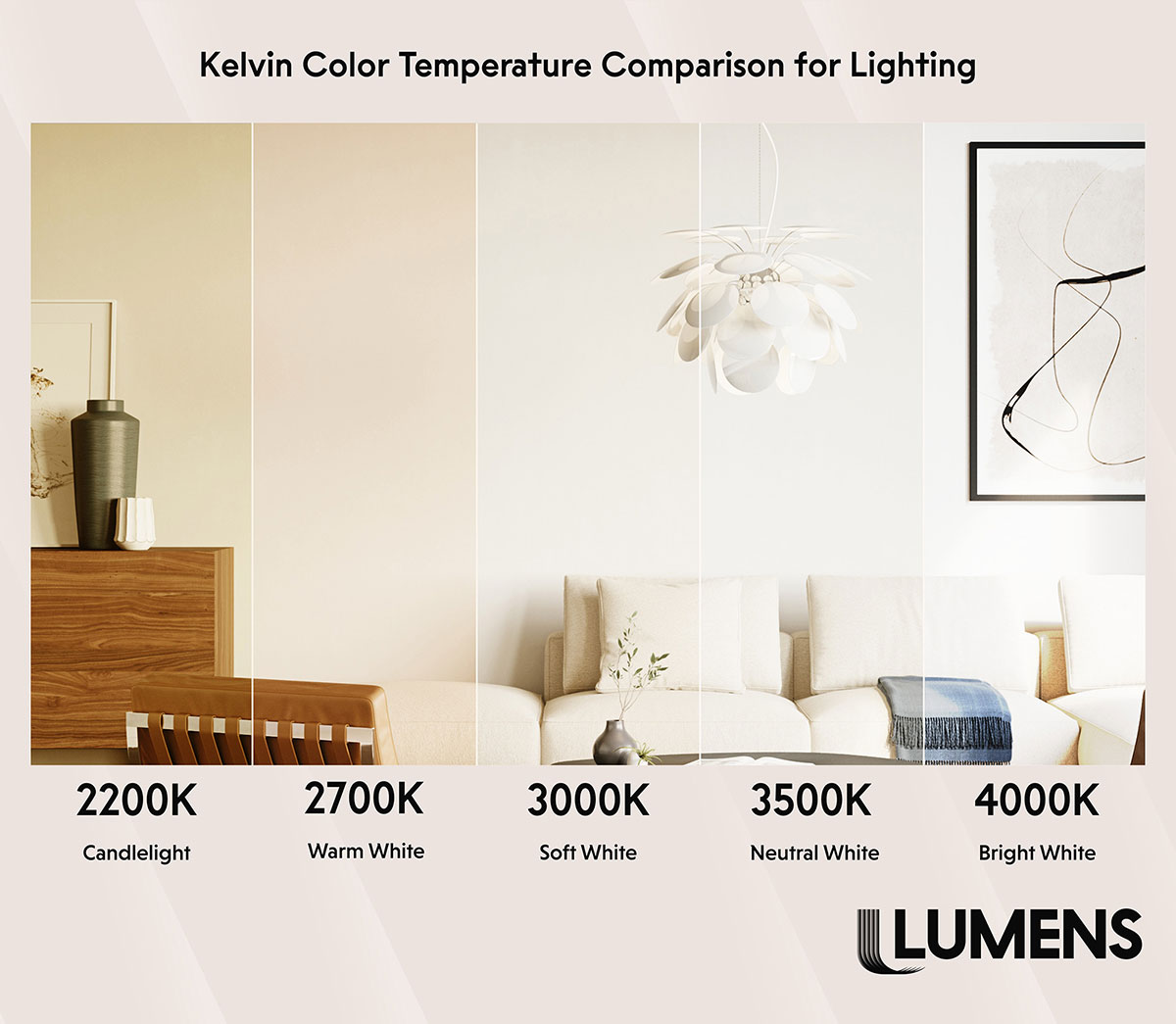
Kelvin Color Temperature Chart
How to Choose the Right Color Temperature for Your Space
Kelvin Range
Color Appearance
Best For…
< 2000K
Candlelight glow
Cozy, intimate spaces; ambient or accent lighting
Ideal for relaxing environments like living rooms, bedrooms, and dining areas.
2000K-3000K
Warm white/yellow
Living rooms, bedrooms, dining rooms, outdoor patios
Ideal for relaxing environments like living rooms, bedrooms, and dining areas.
Creates a welcoming, comfortable atmosphere.
3100K-4500K
Neutral white
Kitchens, offices, workspaces, vanities
Perfect for kitchens, bathrooms, and offices where clarity and visibility are key.
Balances warmth with brightness for task-oriented spaces.
4600K-6500K
Cool white/daylight
Garages, utility rooms, task lighting, display areas
Great for detailed tasks, workshops, and commercial uses.
Mimics daylight, enhancing focus but can feel too harsh for cozy home areas.
6500K+
Bluish daylight
Commercial settings, hospitals, areas needing maximum focus
One of the most common questions homeowners ask is 2700K vs 3000K — which is better?Both fall within the warm white range, but 2700K produces a softer, more amber glow similar to traditional incandescent lighting. It’s often considered the best color temperature for bedrooms and cozy living spaces.3000K is still warm, but slightly whiter and crisper. It’s a popular choice for kitchens and bathrooms where you want warmth without sacrificing clarity.If you’re unsure, start with 2700K in relaxation-focused rooms and move toward 3000K in more functional spaces.
How to Choose the Best Color Temperature for Each Room
There is no universally “correct” Kelvin temperature — the right choice depends on how you use the space and how you want it to feel.
Living Rooms and Bedrooms
For comfort and relaxation, choose 2700K to 3000K. This soft white range creates a calm, welcoming atmosphere and works beautifully with layered lighting like table and floor lamps.
Kitchens and Bathrooms
The best color temperature for kitchens and bathrooms typically falls between 3000K and 4000K. This range provides clean, neutral light that supports visibility while avoiding a harsh, overly clinical feel.
Home Offices and Workspaces
Cooler temperatures between 4000K and 5000K mimic natural daylight and can help improve focus. If accurate color visibility matters — such as in a studio setting — daylight bulbs (5000K) may be ideal.
Dining Rooms and Entertaining Areas
Stick with 2700K or lower to maintain warmth and intimacy. Adding a dimmer switch gives you full control over brightness while keeping the warm color temperature consistent.
Outdoor Spaces
For patios, entryways, and pathways, 2200K to 3000K creates a welcoming glow that complements landscaping and exterior materials. Warmer outdoor lighting also reduces glare and feels more natural at night.
Warm Light vs Daylight: Why It Matters
Choosing between soft white vs daylight bulbs affects more than aesthetics. Warm light signals comfort and rest, making it ideal for winding down. Daylight and cool white lighting promote alertness and clarity, making them better suited for task-heavy areas.Even small shifts in Kelvin — such as moving from 2700K to 3500K — can noticeably change how a room feels.
Why Kelvin Color Temperature Is Essential in Lighting Design
Color temperature is often the first thing you perceive when entering a space, even if you can’t immediately identify it. A beautifully designed room can feel “off” simply because the light temperature doesn’t match its purpose.Understanding the Kelvin scale gives you control. Whether you’re renovating, updating a single fixture, or selecting bulbs for an entire home, choosing the right color temperature ensures your lighting works both visually and functionally.
Ready to find the perfect light bulbs for your home or project?
Explore the full selection of light bulbs at Lumens and filter by color temperature, base type, and more to get the light exactly right.