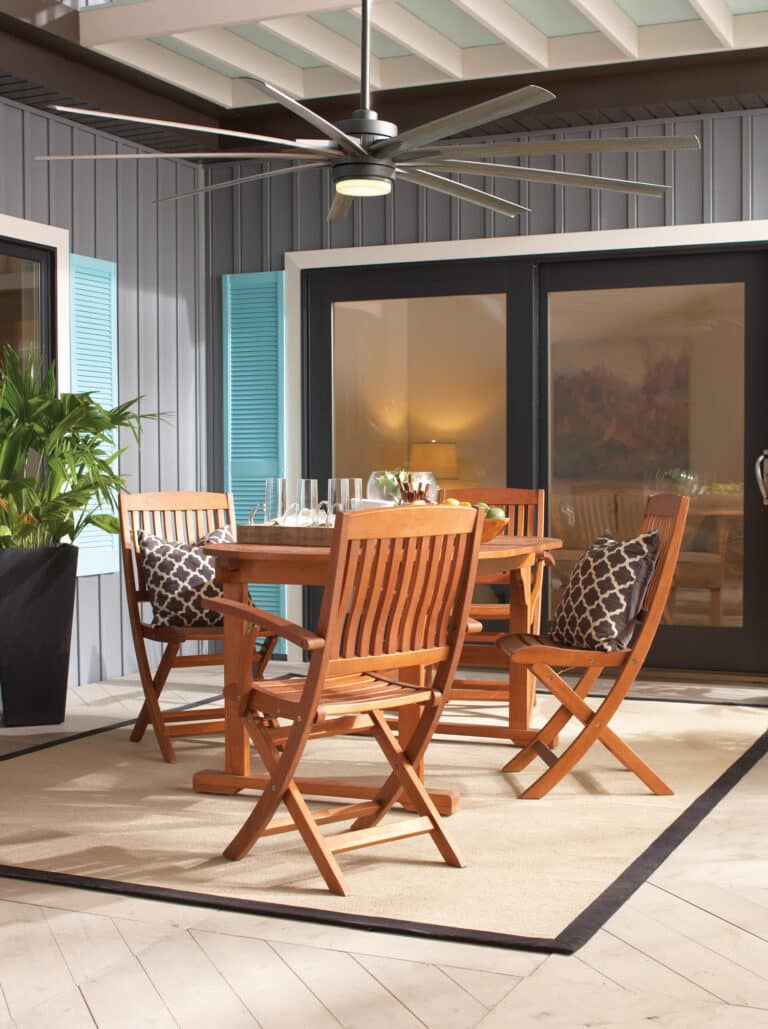
Most outdoor spaces lack air conditioning—and walls—which means a modern outdoor ceiling fan is an outstanding option to cool down a space, circulate the air, and provide a comfortable place to relax or entertain guests on a porch, patio, pergola, sunroom, or garage. Outdoor ceiling fans offer damp or wet ratings that reflect the fan’s ability to withstand moisture from humidity or rain. When choosing one for a patio, pergola, or gazebo, there are a few important factors to consider.
This guide covers indoor vs. outdoor differences, UL ratings, sizing, energy efficiency, styles, and care.
Indoor Vs. Outdoor Ceiling Fans: What's The Difference?
The primary distinction between indoor ceiling fans and outdoor ceiling fans comes down to construction. Indoor models are designed for dry, climate-controlled environments with standard motors and blade materials.
Outdoor-rated fans are engineered to handle the elements. Their motors are sealed and weatherproofed, while blades are crafted from all-weather ABS plastic rather than wood or MDF. Hardware and finishes—often galvanized steel with powder coating—resist corrosion and rust.
A standard indoor ceiling fan should never be installed in an exposed outdoor location. Doing so voids most warranties and creates safety hazards. For any space exposed to the elements, an outdoor-rated fan is essential.
What Makes A Ceiling Fan Safe For Outdoor Use?

Several construction features distinguish outdoor ceiling fans from their indoor counterparts:
- Outdoor fan blades are made with special ABS plastic and are known as all-weather blades.
- These fans are built with galvanized tubular steel and powder-coated paint finishes that stop corrosion and rust.
- The motor casing on an outdoor fan features a waterproof seal, which helps protect it from moisture.
Beyond these physical characteristics, outdoor fans carry UL (Underwriters Laboratories) location ratings indicating where each model can safely operate. Dry-rated fans are for indoor use only. Damp-rated fans handle moisture and suit covered porches and sunrooms. Wet-rated fans withstand direct water exposure, making them suitable for open pergolas, gazebos, and poolside installations.
The Artiste LED Ceiling Fan from Hinkley exemplifies thoughtful engineering, combining weather-resistant construction with refined aesthetics.
Damp- Vs. Wet-Rated Fans At A Glance
| Rating | Where It’s Safe | Typical Placement |
|---|---|---|
| Dry | Indoor, dry rooms only | Bedrooms, living rooms, offices |
| Damp | Covered, moisture-protected areas | Covered porches, sunrooms, garages |
| Wet | Direct water and weather exposure | Open pergolas, gazebos, poolside |
Understanding these ratings ensures the right fan is selected for each environment, protecting both the investment and household safety.
Where Should You Use An Outdoor Ceiling Fan?
Outdoor ceiling fans enhance comfort across a variety of spaces. Selecting the appropriate rating depends on moisture and weather exposure.
Porch
As decorative and functional features, ceiling fans are popular additions to porches. A porch ceiling fan is great for cooling down the area during the day and circulating cool evening breezes. Whether stepping outside for a moment or lounging on porch furniture, the movement of air produced by an outdoor fan helps protect against unpleasant heat or humidity.
Sunroom
Sunrooms, solariums, and garden rooms are popular options for incorporating indoor-outdoor spaces in home, restaurant, and office floor plans. These rooms provide full exposure to sunlight, visibility of the outdoors, and access to fresh air while being sheltered from unwanted elements. However, with many windows to take in sunlight, sunrooms are susceptible to going above room temperature. In summer or spring, a sunroom can become uncomfortably warm. With its ability to circulate air and regulate temperatures, an outdoor fan becomes essential during warmer months.
Garage

If AC in the garage is non-existent, this area of the home will become a heat trap without a fan. Because of common garage uses—storage, woodworking, home projects—one can easily spend hours there. An outdoor ceiling fan can make a warm garage much more bearable.
The Java Outdoor LED Ceiling Fan from Minka Aire Fans offers a versatile damp-rated option for covered outdoor areas.
What Size Outdoor Ceiling Fan Do You Need?

Just like an indoor fan, choosing the right size depends on the size of the space. Consider square footage, then match to a ceiling fan diameter:
- Spaces up to 75 square feet = 29-36 inch
- Spaces 76-144 square feet = 36-42 inch
- Spaces 144-225 square feet = 44 inch
- Spaces 225-400 square feet = 50-54 inch
| Space Size | Fan Diameter |
|---|---|
| Up to 75 sq. ft. | 29–36 inches |
| 76–144 sq. ft. | 36–42 inches |
| 144–225 sq. ft. | 44 inches |
| 225–400 sq. ft. | 50–54 inches |
For safety and optimal airflow, fan blades should hang at least 7 feet above the floor. The Haiku Monochrome Outdoor Ceiling Fan from Big Ass Fans demonstrates precision engineering for larger outdoor spaces.
Choosing An Energy-Efficient Outdoor Fan
Modern outdoor ceiling fans offer several features that reduce energy consumption. DC motors operate more quietly and efficiently than AC motors, drawing less power while delivering consistent airflow. Integrated LED light kits eliminate the need for separate fixtures.
Reversible operation allows a fan to circulate warm air downward in cooler months, extending seasonal utility. Energy Star-certified models meet strict efficiency guidelines and reduce electricity costs over the fan’s lifespan.
What Styles Of Outdoor Ceiling Fans Are Available?
Outdoor ceiling fans come in any style needed to complement outdoor decor, from traditional to ultra-contemporary, from rustic weathered wood looks to industrial metal. No matter what style speaks to a homeowner or design professional, Lumens’ selection has options in finishes including matte black, brushed nickel, and weathered woods.
Outdoor Ceiling Fan Care And Longevity
Regular maintenance extends the life of an outdoor ceiling fan. Wipe blades and housing periodically with mild detergent and a soft cloth, avoiding harsh chemicals that can damage finishes. Seasonally, check and tighten mounting hardware to ensure secure attachment.
If a fan wobbles, the blades may have become unbalanced due to warping or debris. Blade-balancing kits are available, or blades can be cleaned and inspected to restore smooth operation.
Outdoor Ceiling Fan FAQs
Can an indoor ceiling fan be used on a covered porch?
No. Covered porches require at least a damp-rated fan to handle humidity and temperature fluctuations safely.
Can an outdoor ceiling fan be used indoors?
Yes. Outdoor-rated fans function perfectly indoors—their durable construction exceeds what indoor conditions require.
How many blades should an outdoor ceiling fan have?
Blade count affects aesthetics more than performance. Three-blade designs suit modern spaces; four- or five-blade models offer a traditional appearance.
Is a flush-mount or downrod fan the better choice?
Ceiling height determines the mounting style. Flush-mount fans work best for ceilings under 9 feet, while downrod mounts suit higher ceilings to position blades at optimal height.
How high should an outdoor ceiling fan hang?
Blades should be at least 7 feet above the floor and 10 to 12 inches below the ceiling for optimal airflow.
Are outdoor ceiling fans worth the investment?
Outdoor ceiling fans provide meaningful temperature reduction, improved air circulation, and insect deterrence while adding a design element to outdoor living spaces. For frequently used porches and patios, they offer substantial comfort and value.
Selecting the right outdoor ceiling fan means matching the UL rating to the level of exposure, sizing the fan to the square footage, and choosing a style that complements the setting. Lumens’ curated collection brings together design-forward options from leading brands, making it easy to find an outdoor fan that performs beautifully.