Transform your kitchen into a beautifully lit, functional space by sidestepping these frequent lighting slip-ups. Discover expert lighting tips and curated solutions from Lumens.
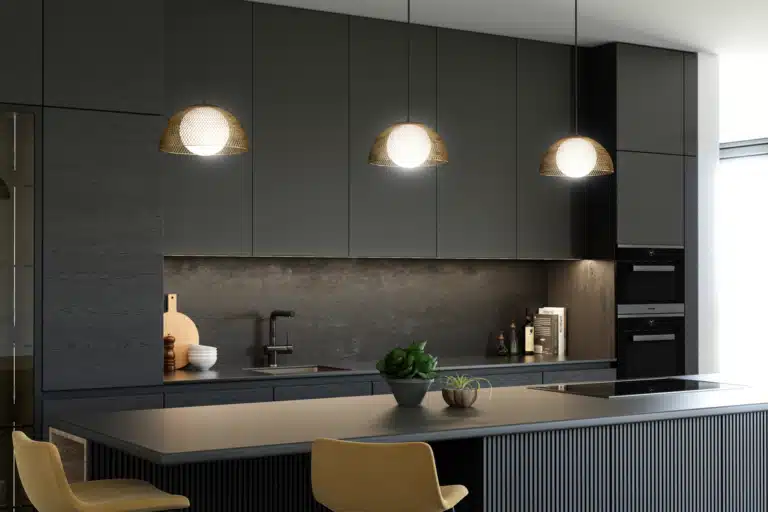
Modern Kitchens Demand Modern Lighting
Today’s kitchens serve as gathering spots, homework stations, and culinary hubs. Achieving the right blend of task, ambient, and accent lighting is essential, but easy to get wrong. And of all the decisions you make during a kitchen renovation, lighting is one of the hardest to change after installation.
Avoid these five common kitchen lighting mistakes to ensure your space is both stunning and practical.
1. Neglecting Undercabinet Lighting

The Mistake: Relying solely on overhead or ambient lighting often leaves countertops in shadow, especially beneath cabinets, making food prep challenging and unsafe.
The Fix: Install undercabinet lighting to create a bright, functional workspace. Choose from plug-in models for a quick upgrade or hardwired solutions for seamless integration. Opt for modular, dimmable designs to customize your kitchen’s atmosphere and double as nighttime safety lighting.
When selecting undercabinet LEDs, pay close attention to color temperature. A range of 3000K to 4000K works best for task areas: 3000K delivers a warm, inviting glow that complements wood tones and natural stone, while 4000K provides a crisp, neutral light ideal for food preparation. For more on how color temperature affects a room, explore our guide to Understanding Kelvin Color Temperature.
Expert Tip: For continuous LED strip installations, aim for 200 to 300 lumens per foot of counter space. This gives you enough light for detailed tasks like chopping and reading recipes without creating harsh hot spots.
2. Overusing Recessed Lighting

Link Pendant by Ray Power for LZF
The Mistake: Filling your ceiling with too many recessed lights can create harsh, uneven illumination and leave walls and corners dim.
The Fix: Follow the “less is more” rule: space recessed lights about 4 feet apart for 8-foot ceilings (divide ceiling height by two to calculate spacing). Supplement with pendant lights or wall sconces to achieve a balanced glow throughout your kitchen.
The reason too many recessed fixtures feel clinical is that they cast light only downward, leaving vertical surfaces and corners in relative darkness. A kitchen that relies exclusively on recessed cans often feels flat and one-dimensional. The solution is layered lighting: combining ambient, task, and accent sources so the light reaches every plane of the room.
Expert Tip: Use recessed lights for general ambient coverage, then add pendants over the island for focused task light and sconces on flanking walls for warmth. This three-source approach gives you depth and flexibility that recessed lighting alone cannot achieve.
3. Choosing the Wrong Fixture Size

The Mistake: Installing a tiny pendant over a large island or an oversized chandelier in a compact dining nook throws off the room’s proportions and can result in insufficient lighting.
The Fix: Select fixtures that match your kitchen’s scale. For general pendant lighting, add the room’s length and width in feet, then convert that total to inches for the ideal fixture diameter. For islands, pick a light about 12 inches smaller than the surface’s narrowest width. Explore our full range of kitchen pendants and chandeliers to suit any space.
Size is only half the equation. Hanging height matters just as much. Pendants over a kitchen island should sit 30 to 36 inches above the countertop surface. If your ceiling is taller than 8 feet, raise the fixture an additional 3 inches for every extra foot of ceiling height.
Expert Tip: Combine both rules for a quick gut check before you buy. A 36-inch-wide island calls for roughly a 24-inch-diameter pendant, hung 30 to 36 inches above the surface. If the math checks out, the fixture will look and perform exactly right.
4. Making Your Kitchen Too Bright

Dipping Light LED Table Lamp by Marset
The Mistake: Excessive or overly bright lighting can cause discomfort, headaches, and fatigue.
The Fix: Embrace layered lighting for a comfortable, adaptable kitchen environment. Use dimmers and separate switches for different lighting zones. Integrate smart lighting controls for the most precise, adaptable command over every zone in your kitchen.
Dimmers are the single most effective upgrade for controlling brightness. A dimmable fixture lets you shift from full task mode during meal prep to a softer ambient glow for entertaining or winding down in the evening. Dimmer switches are a straightforward addition to most circuits, and the difference in livability is immediate. When selecting dimmable fixtures, confirm that both the bulb and the switch are compatible to avoid flickering or buzzing.
Color temperature plays an equally important role in how bright a kitchen feels. The Kelvin scale measures the warmth or coolness of a light source: 2700K produces a warm, candlelit quality, 3000K offers a versatile warm white suited to most kitchens, and 4000K leans neutral and energizing for dedicated task zones. For a kitchen that feels cohesive at every hour, 3000K is a reliable baseline.
Expert Tip: Match the color temperature across every fixture in the kitchen. Mixing a 2700K pendant with 4000K recessed cans creates a jarring visual contrast that makes the space feel disjointed. Consistency is the fastest path to a polished result.
5. Highlighting the Wrong Kitchen Areas

Salix LED Accent Pendant by Nick Sheridan for Cerno
The Mistake: Placing statement fixtures in less important areas or crowding the space with competing focal points can disrupt your kitchen’s flow and style.
The Solution: Use accent lighting strategically to draw attention to key features like islands or dining tables. Limit yourself to one dramatic focal point per area, and coordinate other fixtures for a cohesive look.
Kitchen Lighting FAQ
What Is the Best Color Temperature for Kitchen Lighting?
For most kitchens, 3000K strikes the ideal balance between warmth and clarity. It’s inviting enough for everyday living yet bright enough for cooking and food prep. Dedicated task zones like countertops can go up to 4000K for crisper visibility. Learn more in our guide to Understanding Kelvin Color Temperature.
Expert Tip: Choose one color temperature for the entire kitchen and stick with it. Consistency across pendants, recessed fixtures, and undercabinet strips is what separates a cohesive design from a patchwork of mismatched light.
How Many Recessed Lights Do I Need in My Kitchen?
Start with the ceiling height divided by two to determine spacing in feet. For an 8-foot ceiling, that means placing recessed lights roughly 4 feet apart. Then count how many fit comfortably across your ceiling without clustering near walls.
Expert Tip: Resist the urge to fill every gap with a recessed can. Supplement with pendants or sconces instead. A kitchen with multiple light sources at different heights always feels more dimensional than one lit entirely from above.
Should Kitchen Lights Be Dimmable?
Yes. Dimmers give you control over intensity throughout the day, from bright task lighting during morning routines to a low, relaxed glow for evening gatherings. They also extend bulb life and reduce energy consumption over time.
Expert Tip: When pairing LED fixtures with dimmer switches, verify compatibility before installation. Not all LED drivers work with every dimmer, and a mismatch can cause flickering, humming, or limited dimming range.
What Size Pendant Light Do I Need Over a Kitchen Island?
Measure the narrowest width of your island in inches, then subtract 12. The result is your target fixture diameter. For example, a 36-inch-wide island pairs well with a pendant that’s roughly 24 inches across.
Expert Tip: Hang the fixture 30 to 36 inches above the countertop for standard 8-foot ceilings. For every additional foot of ceiling height, raise the pendant 3 inches. This keeps sightlines clear while maintaining effective task illumination.