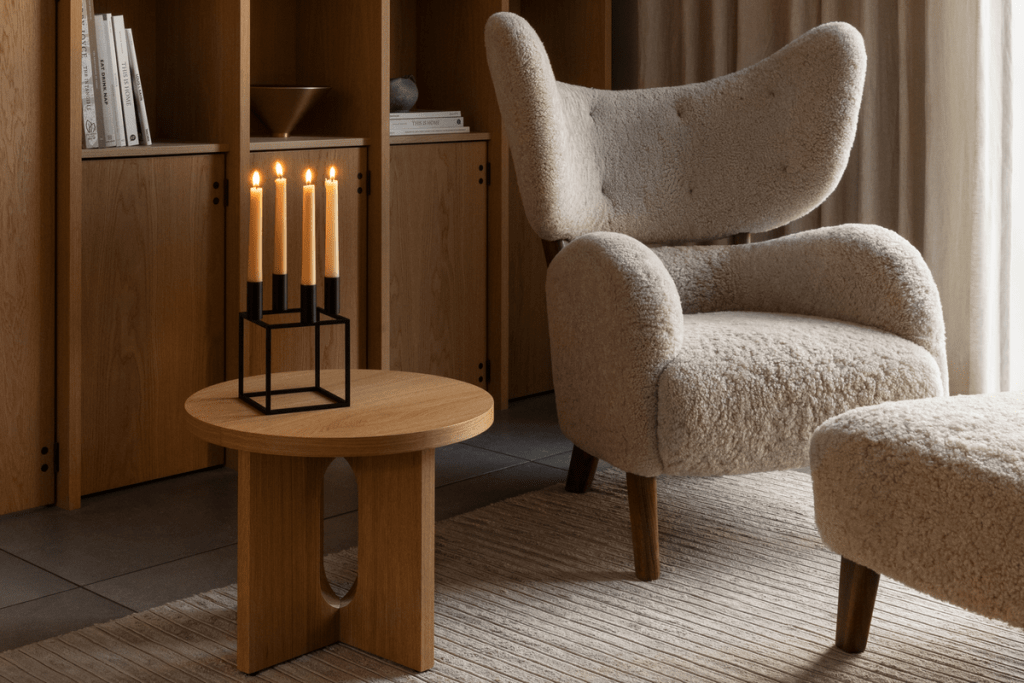
Lighting does more than make a room usable. The right architectural detail lighting accentuates structure, draws the eye to considered forms, and gives a space its atmosphere.

This guide defines architectural detail lighting and separates it from ambient and decorative lighting. It then works through practical techniques for lighting specific features, from recessed and undercabinet systems to coves, ledges, and uplit columns. Curated fixtures from the brands Lumens partners with appear throughout, followed by answers to the questions design professionals ask most about lighting details.
What Is Architectural Detail Lighting?

At its core, detail lighting is defined less by the fixture than by its purpose and placement within a space.
Generally speaking, architectural detail lighting is lighting that serves both a building’s design and function. When exploring architectural lighting, it’s important to look at three main elements: First, consider the building’s aesthetic. Is it commercial or residential? Design-forward or function-first? Next, consider ergonomics and function. Does this lighting aid in one’s ability to live, work, relax? Is it making the space easier to use for its intended purpose? Finally, one should consider the energy efficiency of the lighting and its distribution throughout the space, as architectural detail lighting is often intended for long-term use.
Detail Lighting vs. Ambient and Decorative Lighting
While functional lighting is ideal when looking to perform a task or illuminate a dark space, decorative architectural lighting is the key to making a space pop. Architectural detail lighting has the power to create an atmospheric environment, or it can simply be the last touch needed to add an extra bit of dimension to a room. This lighting can come in a big or small fixture, but it always delivers a large visual impact when applied correctly.
Understanding where detail lighting sits among the other layers of a scheme clarifies its role. Ambient lighting provides the general, even illumination that lets a room function. Decorative lighting, such as a sculptural pendant or chandelier, draws attention to the fixture itself as an object. Architectural detail lighting sits between the two: it lights the architecture and its details rather than the fixture, shaping mood and depth while often staying hidden from view.
| Lighting Type | Primary Purpose | Typical Example |
|---|---|---|
| Ambient lighting | Even, general illumination for everyday use | Recessed ceiling downlights, flush mounts |
| Decorative lighting | A fixture that stands out as a design object | Sculptural pendant or chandelier |
| Architectural detail lighting | Accentuates architecture and details, often concealed | Cove lighting, undercabinet strips, uplighting |
Techniques for Lighting Architectural Details
Each architectural feature calls for a different technique. The sections below pair common approaches with fixtures suited to the job.
Recessed and Undercabinet Systems
Recessed and undercabinet fixtures are the workhorses of detail lighting, disappearing into ceilings, cabinets, and coves so the light detail reads before the hardware does.

Architectural lighting can be applied to a wide reach of buildings, rooms and spaces. From recessed lighting to track lighting to undercabinet lights and outdoor fixtures, the ways light can infuse a space are seemingly endless. However, it’s important not to lose sight of the functionality of architectural lighting and how it can best serve its architecture.
Cove, Ledge, and Ceiling Lighting
Coves, ledges, and recessed ceiling channels conceal a light source and wash an adjacent surface, one of the most effective ways to add lighting details without a visible fixture. Flexible tape light is often the tool of choice for these runs.

Lighting from ledges is common in projects where there is reinstating of an existing wall or adding of wall panels. In cases when the ceiling can’t be altered, accentuating it with light is an easy and effective way to transform the look of the space. A ledge set by the wall is a great place to hide fixtures and run cabling, as well as hold ballasts, drivers or power supplies. The same principle applies to a ceiling cove, where a hidden channel grazes the plane above to lend a room quiet depth.
Uplighting for Columns, Walls, and Windows
Uplighting reverses the expected direction of light to accentuate vertical features such as columns, accent walls, and window reveals.

Low-level architectural lighting is a way to bring drama and attention to a space. Lighting from a low level is visually counter-intuitive, as natural light shines from above or the sides. For this reason, recessed or surface-mounted lights placed in the ground to deliver up-light create an especially unique atmosphere. Up-lighting can accentuate architectural elements such as windows, columns and walls.
Why Architectural Detail Lighting Matters
When correctly applied, architectural detail lighting has the power to shift the mood, look and feel of a room or building. It accentuates architecture, highlights décor and adds drama that can transform a space in seconds. Perhaps most importantly, it has the power to create an environment that makes people feel good within a space.
Frequently Asked Questions
What is architectural detail lighting?
Architectural detail lighting is lighting that serves both a building’s design and function, accentuating structural and decorative details rather than simply illuminating a task. It shapes mood, adds dimension, and highlights features such as coves, columns, and cabinetry. The fixtures are often concealed so the effect reads before the hardware.
What is the difference between architectural lighting and decorative lighting?
Decorative lighting draws attention to the fixture itself as a design object, such as a sculptural pendant or chandelier. Architectural detail lighting instead lights the architecture and its details, usually from a concealed source. One is meant to be seen; the other is meant to be felt.
What are the three main types of lighting used in interior design?
Most schemes layer ambient, task, and accent lighting. Ambient lighting provides general illumination, task lighting supports specific activities, and accent or architectural detail lighting highlights features and adds depth. A considered detail lighting plan balances aesthetic, function, and energy efficiency.
What are some examples of architectural detail lighting?
Common examples include recessed downlights, undercabinet systems in kitchens, cove and ledge lighting that washes a wall or ceiling, and inground uplighting for columns, walls, and windows. Each technique lights a specific architectural feature while keeping the source discreet.
What is considered an architectural detail?
An architectural detail is a defined structural or design element within a space, such as a column, cove, beam, niche, ledge, accent wall, or window reveal. Lighting these details accentuates the character of a building and adds visual depth.
We can help you navigate the technical details of your specific lighting needs. Our ALA-certified lighting experts have the expertise to help you take on any project. Plus, Lumens Professional Partners enjoy B2B pricing and access to exclusive B2B-only events and brands. Join Lumens Professional to get started.