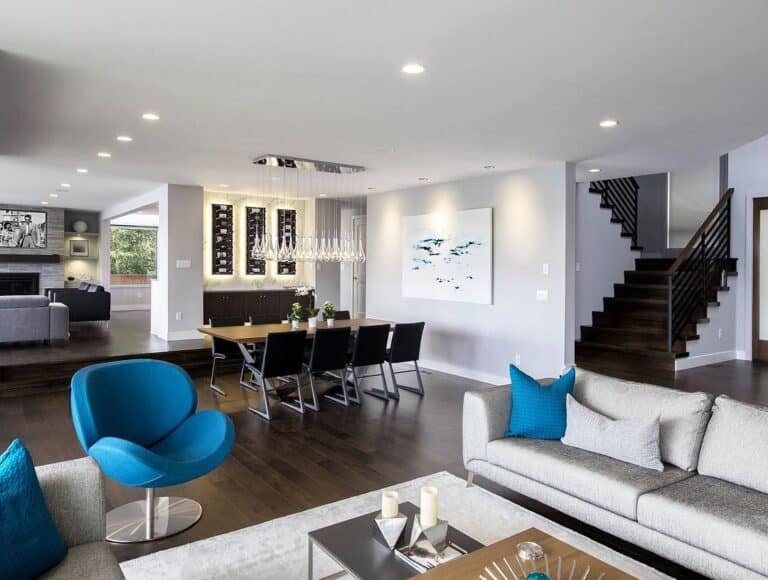
Too little light can make a room feel somber, while too much light can feel harsh and unwelcoming. A dimmer gives you control over the mood, function, and energy consumption of any space. And in most homes, adding one is as simple as swapping out a standard switch.
With LED technology now dominant in residential and commercial lighting, understanding dimmer compatibility is the modern buyer’s real question. Matching the right dimmer to your light source ensures smooth, flicker-free performance and full range control.
When selecting dimmers and dimmable lighting, always defer to the requirements set by the lighting manufacturer and follow local electrical codes. Need assistance? Browse our full selection of dimmers.
Dimmer Types
Not all dimmers work the same way. Understanding the core technologies helps you match a dimmer to your light source and avoid common issues like flickering or buzzing.
Traditional Dimmer Categories
- Standard/Rotary Dimmers: Originally designed for incandescent and halogen bulbs, these use a simple resistive circuit to reduce voltage. They work well with resistive loads but can cause issues with LEDs.
- Electronic Low Voltage (ELV) Dimmers: Built for low-voltage lighting systems, ELV dimmers provide smooth, quiet dimming for transformers and many LED fixtures. They are often the preferred choice for integrated LED luminaires.
- 0-10V Dimmers: Common in commercial and architectural applications, these dimmers use a separate low-voltage control signal to dim fixtures. Many European and high-end fixtures rely on 0-10V protocols.
- Integrated Dimmers: Some fixtures and lamps include built-in dimming controls, eliminating the need for a wall-mounted dimmer entirely.
The SofTap TruUniversal Dimmer by Legrand Adorne handles a wide range of load types in a single device, making it a versatile solution for mixed-lighting environments.

Types Of LED Dimmers: Leading-Edge vs Trailing-Edge
Modern dimmers are often categorized by how they cut the AC waveform to reduce power:
- Leading-Edge (TRIAC) Dimmers: These cut the front of each AC wave. Designed for incandescent and halogen loads, they handle higher wattages but can produce buzzing or flickering when paired with LEDs.
- Trailing-Edge (ELV) Dimmers: These cut the back of each wave, resulting in smoother, quieter dimming. Trailing-edge dimmers are what most LED fixtures require for optimal performance, especially at low light levels.
When shopping for LED-compatible dimmers, trailing-edge or ELV-rated models are typically the safest choice. Always verify compatibility with the fixture manufacturer’s
Smart Dimmers
Smart dimmers add wireless connectivity to traditional dimming functionality. They integrate with home automation systems and allow control via app, voice assistant, or scheduling. Many smart dimmers use trailing-edge technology and include minimum load adjustments, making them well-suited for LED circuits.
Lighting Types And How To Dim Them
Different light sources require different dimming approaches. Here is what to consider for each technology.
Incandescent

Incandescent bulbs remain the simplest to dim. Standard rotary and toggle dimmers control incandescent lamps without compatibility concerns. As general-service incandescent bulbs have been phased out under the 2023 DOE efficiency standards, halogen remains the primary incandescent option. Either way, you still get the same warm light at lower wattage when dimmed.
Fluorescent
Fluorescent tubes require a dimmable ballast to work with a dimmer. Standard fluorescent fixtures are not dimmable without this specialized hardware. Most residential applications have moved away from fluorescent in favor of LED alternatives.
Compact Fluorescent Bulbs (CFL)
CFLs present compatibility challenges. Only bulbs explicitly labeled “dimmable CFL” will work, and even then, performance varies. CFLs often struggle at the lower end of the dimming range and may not dim as smoothly as incandescent or LED options.
Integrated LEDs

Integrated LED fixtures have the light source built directly into the luminaire. These fixtures typically specify the dimming protocol in their documentation. Most integrated LEDs require an ELV or trailing-edge dimmer, and many come with manufacturer-tested compatibility lists. Can you use dimmers on LED lights with integrated sources? Yes, provided you select a dimmer rated for the fixture’s load type.
LED Bulbs

Screw-in and pin-base LED bulbs are available in both dimmable and non-dimmable versions. Always confirm the bulb packaging specifies “dimmable” before pairing with a dimmer switch. Can you put dimmers on LED lights? Absolutely, when both the bulb and the dimmer are rated for the application.
Some LED bulbs may cut out at the lowest 10% of the dimming range. This is normal behavior, not a defect. For a deeper dive into LED technology, see our guide to LEDs.
How To Choose The Right Dimmer
Selecting the correct dimmer requires matching your light source to the appropriate dimming technology. Follow these steps:
- Identify the bulb or fixture technology. Determine whether you are dimming incandescent, halogen, LED bulbs, integrated LED fixtures, or low-voltage systems.
- Confirm the light source is dimmable. Not all bulbs and fixtures support dimming. Check the packaging or spec sheet for “dimmable” designation.
-
Match the dimmer to the load type.
- Incandescent and halogen: standard or leading-edge dimmers
- Most LED bulbs and integrated fixtures: trailing-edge or ELV dimmers
- Low-voltage systems with transformers: ELV or MLV dimmers, matched to the transformer type
- Commercial or architectural fixtures: 0-10V dimmers
- Check the dimmer’s load rating. Every dimmer specifies a minimum and maximum wattage. Add up the total wattage of all fixtures on the circuit and confirm it falls within the dimmer’s rated range. Running below minimum load can cause flickering; exceeding maximum load can damage the dimmer.
- Decide on smart control. If you want app, voice, or scheduled control, select a smart dimmer compatible with your home automation ecosystem and your fixture type.
Quick Reference: Dimmer Selection By Bulb Type
| Light Source | Recommended Dimmer Type | Notes |
|---|---|---|
| Incandescent / Halogen | Standard, Leading-Edge | Simplest compatibility |
| Dimmable LED Bulbs | Trailing-Edge, ELV | Check manufacturer list |
| Integrated LED Fixtures | Trailing-Edge, ELV, 0-10V | Match to fixture spec |
| Low-Voltage (Transformer) | ELV or MLV | Match transformer type |
| CFL (Dimmable) | CFL-Compatible Dimmer | Limited range typical |
Always verify compatibility against the manufacturer’s tested dimmer list when one is provided. When in doubt, trailing-edge dimmers offer the widest LED compatibility.
Common Dimming Problems And How To Fix Them
Even with careful selection, dimming issues can occur. Here are the most common problems and their solutions.
Flickering Or Strobing
Likely causes: The dimmer is incompatible with the LED driver, the bulb is not rated for dimming, or the total load is below the dimmer’s minimum.
Fixes:
- Switch to a trailing-edge or LED-rated dimmer
- Confirm the bulb is labeled “dimmable”
- Add fixtures to the circuit or install a minimum load resistor if available
Buzzing Or Humming
Likely causes: Leading-edge dimmers can cause vibration in LED drivers, resulting in an audible hum. Loose wiring or incompatible components also contribute.
Fixes:
- Replace with a trailing-edge or ELV dimmer
- Ensure all wire connections are secure
- Try a different bulb brand, as driver quality varies
Limited Dimming Range Or Drop-Out
Likely causes: Some LEDs do not dim smoothly below 10-20% output. Others may cut out entirely at low levels. This is often a bulb characteristic, not a dimmer defect.
Fixes:
- Accept the lower limit as normal for that LED
- Switch to a bulb with a wider dimming range (check spec sheets)
- Use a dimmer with adjustable low-end trim to fine-tune the cutoff point
If problems persist, consult the fixture manufacturer’s compatibility list. Pairing tested dimmer and bulb combinations eliminates guesswork.
Frequently Asked Questions
Can you use a regular dimmer switch on LED lights?
Standard incandescent dimmers can cause flickering, buzzing, or limited range with LEDs. For reliable performance, use a dimmer rated for LED loads, typically trailing-edge or ELV.
What is the difference between leading-edge and trailing-edge dimmers?
Leading-edge dimmers cut the front of the AC waveform and suit incandescent and halogen bulbs. Trailing-edge dimmers cut the back of the wave, providing smoother, quieter control for LEDs.
Why are my LED bulbs flickering with a dimmer?
Flickering usually indicates a mismatch between the dimmer and the LED driver. Switching to an LED-rated trailing-edge dimmer often resolves the issue. Also confirm the bulb is dimmable.
Can I dim any LED bulb?
No. Only bulbs explicitly labeled “dimmable” will work with a dimmer. Non-dimmable LEDs may flicker, buzz, or fail when connected to a dimmer circuit.
Do I need an electrician to install a dimmer switch?
Replacing a standard switch with a dimmer is a straightforward project for those comfortable with basic electrical work. However, local codes may require a licensed electrician, and complex wiring (three-way circuits, smart home integration) benefits from professional installation.
How many LED bulbs can one dimmer handle?
Check the dimmer’s wattage rating and compare it to the total wattage of all bulbs on the circuit. LED loads are low, so most residential dimmers can handle multiple fixtures. Stay within the rated minimum and maximum for best results.
Choosing the right dimmer comes down to two factors: your light source and the dimming technology it requires. LED fixtures and bulbs perform best with trailing-edge or ELV dimmers. Incandescent and halogen remain compatible with standard controls. Always verify compatibility with manufacturer specifications, especially for integrated fixtures.