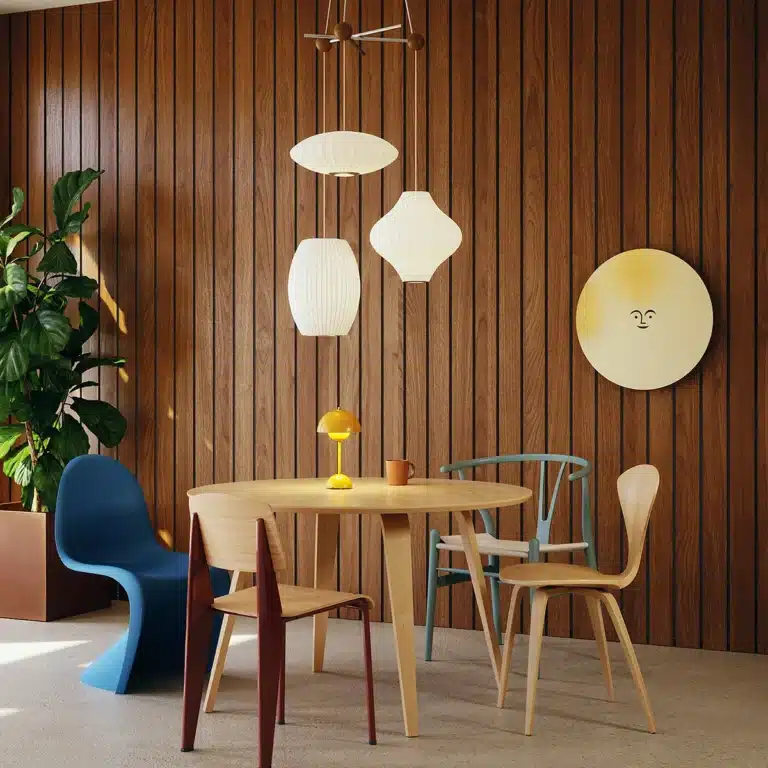
Cherner Round Table by Benjamin Cherner for Cherner Chair Company,
A well-styled modern dining room doesn’t always come right out of the box. Do dining chairs have to match the table? Not at all. A coordinated set of mismatched dining chairs reads more curated than a boxed suite, and coordinating pieces rather than matching them is what gives a room its character. Mixing and matching furniture pieces gives a room some soul, and following a few guidelines will keep the room looking considered rather than chaotic.
1. Match wood finishes

Standard Dining Chair by Jean Prouve, All Plastic Chair by Jasper Morrison and Panton Chair (1999)
by Verner Panton for Vitra
One of the most basic ways to create a more complex dining set is to mix up styles and shapes, but use one consistent type and finish of wood. This works better with neutral finishes like walnut, teak and maple that are often easier to find across various collections or furniture brands. Sticking to a certain wood finish narrows down the pool of choices, but still leaves a bevy of options that don’t have to be anywhere near matching.
Expert Tip: A stout, clean-lined dining table pairs well with a more stylized chair in the same walnut finish, creating a tailored look from two entirely different styles.
2. Keep it monochromatic

Disparate shapes, styles and finishes can be unified by sticking to a single color, ideally black or white. This can even help bring together various materials, if working with a selection of chairs and tables in metals, woods, plastics or even marble.
Expert Tip: Combine styles and silhouettes, no matter how different they may seem. Using the same color allows multiple standout designs to have a seat at the table without overwhelming each other.
3. Shake Up a Single Style

Costes Armchair by Philippe Starck for Driade
If the shapes and silhouettes aren’t lining up, bring together a mismatch of styles with a common design theme. Using different pieces that all fall under one look can be a tailored way to showcase an eclectic style. Knowing what the space will look like will help guide in choosing pieces that fall under that umbrella.
Expert Tip: Combine a playful riff on a classic theme, like modern meets antique. The result is a graceful aesthetic that is decidedly contemporary, and can add a playful touch to a formal dining room. Various finishes can be unified using a common design key. To keep the overall collection cohesive, make sure that there’s a thread that ties the various parts together. Try using iconic or antique shapes for an unexpected twist. Clean-lined versions of historical shapes can be a common ancestor for mixed materials.
4. Pair Bold Colors

A pop of color has been a wardrobe staple for ages, and that advice crosses over into interiors especially well. In the dining room, try choosing one bold shade that can bring together different furniture pieces. The key here is to maintain a common language among the shapes found between the tables and chairs. For example, if working with a curvaceous table, look for that same shape in chairs as well. If going with colored chairs, a neutral table is a no-fail way to keep it all in line.
Expert Tip: Keeping within the same model of chair while selecting a few different colors helps this dining collection look put together, not thrown together.
5. Mix and Match

Matching is less important than an overall pulled-together aesthetic. Mixing a dining table and dining chairs from different eras, different finishes, and different design styles can help create an approachable elegance that is calming and articulate. A mixed approach, done successfully, will make people stop and consider all the decisions and materials being combined, much like a great art piece will collect a viewer’s attention, probing their curiosity.
Try it: Combining natural wood with painted wood creates a unique look in the room, bringing brilliance into the space.
One reliable way to anchor a mix is the statement end chair. On a rectangular table, place a pair of heavier, upholstered chairs or armchairs at the head and foot, then run simpler side chairs along the edges. These weightier captain chairs give the eye a place to rest and make the whole arrangement read as a deliberate composition rather than an accident. When you do combine materials, work with intention: repeat each material, whether wood, metal, or upholstery, at least twice across the set so the look feels planned rather than random.
The tactics at a glance:
- Match wood finishes: keep one consistent wood tone across varied shapes and styles.
- Keep it monochromatic: unify disparate pieces under a single color, ideally black or white.
- Shake up a single style: tie eclectic pieces together with one shared design theme.
- Pair bold colors: let one bold shade connect the table and the chairs.
- Anchor with statement end chairs: upholstered chairs at the head and foot, simpler chairs along the sides.
- Mix materials with intention: repeat each material at least twice so the mix reads deliberate.
6. Choose the Right Table Shape
The shape of the table sets the ground rules for how far you can push a mix. Rectangular and oval tables are the most forgiving. Their length gives distinct chairs room to breathe, and the defined head and foot naturally support statement end chairs. This is the shape to reach for when you want to combine several silhouettes, finishes, or eras in one setting.
Round and square tables ask for a lighter touch. With no clear head or foot and every seat in equal view, they tend to look most balanced with a single, matching chair style that echoes the table’s geometry. A subtle two-tone mix can still work, say two finishes of the same chair, but a full mismatch can feel busy around a compact footprint. Let the table’s form guide how much variation the room can carry.
7. Seating Height and Spacing
When choosing a dining chair, counter or bar-height stool for your space, it is the seating height, not overall height, that is the most important factor in determining the right fit. For proper leg clearance and ergonomic comfort, the general rule of thumb is to pick a chair or stool with a seat height that is roughly 12 inches below the table/counter/bar surface.
For more info, read our guide: How to Choose Seating Height. For adequate elbow and breathing room for guests, ideally there will be one chair or stool for every 24 inches of table or counter surface. The lesson? Don’t be afraid to collect the furniture pieces that are truly loved for fear that they won’t “fit” together. Coordinating a few key elements will bring it all together into a comfortable, beautiful space.
Frequently Asked Questions About Mixing and Matching Chairs
Do dining chairs have to match the table?
No. A coordinated mix reads more curated than a boxed set. Tie pieces together with a shared wood finish, a single color, or one design theme, and the room will look intentional rather than matchy.
Can you mix and match chairs on a round table?
It takes a lighter touch. Round tables have no head or foot and show every seat equally, so they look most balanced with one matching chair style. A subtle two-tone mix of the same chair can still work.
How do you mix chairs without it looking random?
Give the mix a common thread. Hold one element constant, such as wood finish, color, or silhouette, and repeat each material at least twice so the arrangement reads planned rather than accidental.
Can you pair a bench with dining chairs?
Yes. Treat the bench as another seat in the mix and connect it through a shared finish or color. Benches work best along the side of a rectangular or oval table, paired with statement chairs at the ends.