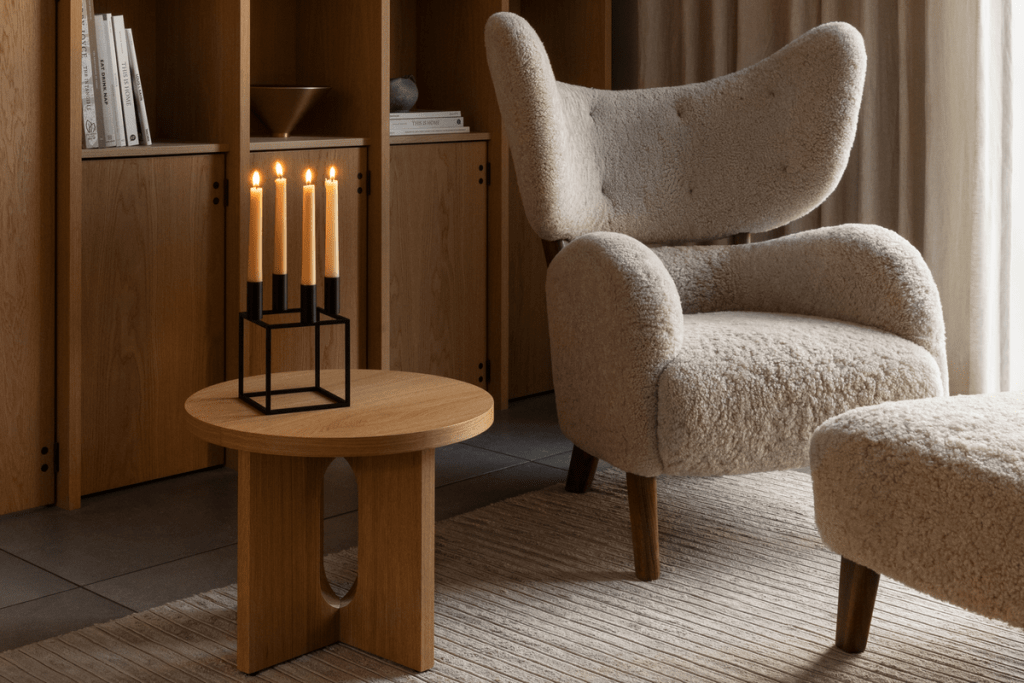
Lighting isn’t just functional, it’s foundational to the look, feel, and versatility of your home or workspace. A single overhead fixture may illuminate a room, but it won’t bring it to life. That requires intention: layering different types of light to create depth, atmosphere, and purpose in every corner.

Light layering is the practice of combining multiple light sources at different heights, intensities, and angles to shape how a space feels throughout the day. It’s a core principle of professional lighting design, and once you understand the framework, you can apply it to any room with confidence. Think of it as composing a palette of light, where each source plays a distinct role and the layers work together to create a space that’s both beautiful and highly functional.
The Three Layers of Lighting

100′ 24V Dry Location Tape Light by Kichler
Every well-lit room relies on three foundational layers: ambient, task, and accent. Each serves a specific purpose, and the interplay between them is what transforms a room from simply bright to truly considered.
Ambient Lighting: Set the Stage
Ambient light is the base layer, the overall illumination that fills a room and allows you to move through it comfortably. It’s the first layer to plan because it establishes the foundation that every other layer builds upon.
Start by considering your natural light. Windows, skylights, and glass doors contribute significantly to a room’s ambient brightness during the day, and understanding that contribution helps you determine how much artificial ambient light you’ll need when daylight fades.
How much ambient light do you need? Aim for about 20 lumens per square foot as a general baseline. A 250-square-foot living room needs approximately 5,000 lumens of ambient light. That total can come from a single fixture or, more often, from a combination of sources distributed across the room for even, shadow-free illumination.

Braxton Drum Pendant/Semi-Flushmount by ELK Home
Task Lighting: Focus Where You Need It
Task lighting delivers bright, focused illumination exactly where you need it for specific activities: reading, cooking, working, or applying makeup. Where ambient light sets the overall mood, task light makes a space genuinely usable.
The lumen target shifts upward for task zones. Plan for approximately 50 lumens per square foot in areas where focused work happens. A kitchen countertop, a home office desk, or a reading nook all benefit from this higher intensity.
Color temperature matters here more than anywhere else. For detail-oriented tasks like drafting, sewing, or food preparation, a cooler color temperature around 4000K provides crisp, clear light that reduces eye strain and makes fine details easier to see. For reading, relaxing, or general desk work, a warmer 2700K to 3000K range offers comfortable illumination that still performs well without feeling clinical. Choosing the right color temperature for each task zone is one of the simplest ways to elevate a lighting plan from adequate to exceptional.

Beyond the Basics: Decorative and Natural Light
Once the three functional layers are in place, consider decorative lighting as a fourth dimension. Decorative fixtures are chosen primarily for their aesthetic impact: a sculptural chandelier that anchors a dining room, a pair of artisan table lamps that define a console, or an iconic floor lamp that becomes a conversation piece. These fixtures may contribute to ambient or accent light, but their first job is visual presence.
Natural light also plays a critical role in layering decisions. Rooms with large windows or southern exposure need less artificial ambient light during the day but may benefit from stronger accent and task layers to compensate as daylight shifts. Successful lighting design involves blending multiple categories to create depth, balance, and flexibility, and that includes accounting for the light nature provides.

Accent Lighting: Add Drama and Depth
Accent lighting is the layer that gives a room its personality. It draws the eye to architectural details, artwork, collections, or textured surfaces, creating focal points and visual interest that flat, even lighting simply cannot achieve.
The key ratio to remember: accent light should be approximately three times brighter than the ambient light in the same space. This contrast is what creates the sense of depth and dimension. Without that differential, accent fixtures blend into the ambient layer and lose their intended impact.
Bringing It All Together
Understanding each layer individually is the starting point. The real craft lies in orchestrating them so they work in concert, shifting emphasis throughout the day as your needs and activities change.
Dimmer switches and smart controls are essential tools for this. A dimmer on your ambient layer lets you lower the overall brightness in the evening, allowing task and accent fixtures to take prominence. Dimmers and smart controls give you the flexibility to reshape a room’s lighting character without changing a single fixture, and smart home-ready systems make it possible to program and recall your preferred settings with a tap or voice command.
Lighting scenes are preset combinations that match specific activities or times of day. A “morning” scene might bring ambient light to full brightness with cool-toned task lighting in the kitchen. An “evening” scene could dim the ambient layer to 40%, activate accent lights on artwork, and warm the color temperature throughout. Scenes turn a thoughtful lighting plan into a living, responsive system.
Room-by-Room Layering Guide
Understanding the theory is valuable. Seeing it applied to familiar spaces makes it actionable. Here are brief layering blueprints for four of the most common rooms in the home.
Living Room: Start with a chandelier or flush mount for ambient illumination, scaled to the room’s square footage and ceiling height. Add floor lamps near seating areas for reading and conversation (task), and flank artwork or architectural features with wall sconces or adjustable recessed lights (accent). This three-source approach creates a room that feels warm, dimensional, and adaptable.
Kitchen: Kitchen lighting demands the most from every layer. Recessed ceiling lights provide ambient coverage. Under-cabinet fixtures and pendants over an island deliver focused task light where you prep, cook, and gather. For accent, consider in-cabinet lighting to showcase glassware or toe-kick LEDs that add a subtle, grounding glow.
Bedroom: A flush mount or small chandelier handles ambient duties, while bedside table lamps serve as primary task lighting for reading. Wall sconces mounted at headboard height offer a secondary task option that frees up nightstand space, and they double as soft accent light when dimmed. Explore the full range of bedroom lighting to find fixtures that suit your space.
Bathroom: Vanity lights or mirror-flanking sconces are the workhorses here, providing both ambient and task illumination for grooming. Supplement with recessed shower lights for safety and comfort (accent), and consider a small pendant or decorative fixture to elevate the room’s overall aesthetic. Browse bathroom lighting for designs that balance performance with style.
Why Layered Lighting Matters

Layered lighting transforms how you experience your home. The benefits are both immediate and lasting:
- Atmosphere and mood: Multiple light sources at varying intensities create warmth, depth, and visual interest that a single fixture cannot replicate.
- Functionality: Each layer addresses a specific need, ensuring every activity has the right amount and quality of light.
- Flexibility: With dimmers and smart controls, a layered plan adapts to different times of day, occasions, and personal preferences.
A layered approach is also inherently energy efficient. By activating only the layers you need at any given moment (accent and task in the evening, ambient during a gathering), you use less energy than relying on a single, always-on overhead source at full output.
Light Layering FAQs
What Are the Three Layers of Lighting?
The three layers are ambient (general room illumination), task (focused light for specific activities), and accent (directional light that highlights features and creates depth). Each layer serves a distinct purpose, and professional lighting designers consider all three when planning any space.
Expert Tip: Start your plan with the ambient layer, then add task fixtures where you work or read, and finish with accent lights to create visual focal points. This order ensures the foundation is solid before you refine.
How Many Lumens Do I Need for Each Layer?
For ambient lighting, plan for approximately 20 lumens per square foot. Task zones need roughly 50 lumens per square foot for comfortable, strain-free illumination. Accent lighting should be about three times brighter than the ambient level in the same area to create noticeable contrast.
Expert Tip: These are starting guidelines, not rigid formulas. Room color, ceiling height, and surface reflectivity all influence how bright a space feels. A room with white walls and light floors will feel brighter at the same lumen count than one with dark finishes.
What Is the Best Color Temperature for Each Lighting Layer?
Ambient lighting in living spaces typically works best at 2700K to 3000K, which produces a warm, inviting glow. Task lighting varies by activity: 2700K to 3000K for reading and general work, and 4000K for detail-oriented tasks like cooking or drafting. Accent lighting should match or complement the ambient color temperature so the overall palette feels cohesive.
Expert Tip: Avoid mixing widely different color temperatures in the same sightline. A 2700K table lamp next to a 5000K overhead fixture creates visual tension. Keep temperatures within a 500K range per zone for a harmonious result.
Do I Need All Three Layers in Every Room?
Not necessarily. Closets, utility spaces, and hallways often function well with ambient light alone. However, any room where you spend meaningful time (living rooms, kitchens, bedrooms, bathrooms, home offices) benefits significantly from all three layers working together. The more activities a room supports, the more valuable a layered approach becomes.
Expert Tip: Even in smaller spaces, a single accent or task fixture can make a surprising difference. A picture light above a hallway print or a small reading lamp in a guest room adds purpose and polish with minimal effort.
A thoughtfully layered lighting plan is one of the most impactful investments you can make in your home. It shapes how spaces feel, how they function, and how you move through them from morning to night. Whether you’re refining a single room or rethinking your entire home, the principles remain the same: build from the ambient base, add task light where you need it, accent the details that matter, and give yourself the controls to shift between scenes.