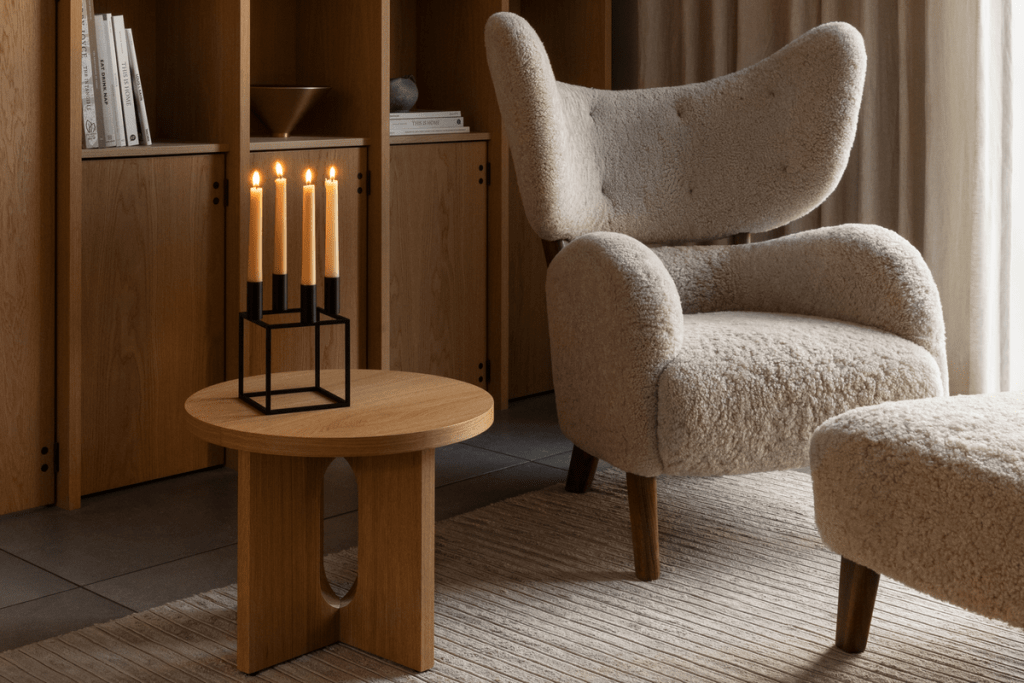
When choosing lighting for a home or workspace, understanding the difference between uplighting and downlighting is essential. Both styles offer distinct benefits, but their impact on brightness, ambiance, and functionality varies. In short, downlighting delivers more focused, usable task light, while uplighting casts softer, ambient light that makes a space feel larger and brighter.
Read on for expert guidance on where and how to use uplights and downlights to maximize light in any room. This guide explains how and where these fixtures work best, and how much light each one actually provides.
What Is Uplighting?
Uplights are fixtures designed to direct light upward, often reflecting off the ceiling to create a bright, open atmosphere. Perfect for rooms with high ceilings or architectural details, uplighting enhances ambient illumination and visually expands spaces.
Because the light bounces off the ceiling before it reaches the room, uplighting reads as indirect and ambient. It softens shadows and lifts the overall glow, so a space feels larger even when its perceived task brightness stays low.
What Is Downlighting?

Downlights are fixtures that shine light directly downward, offering focused and functional illumination. They excel at task lighting and are commonly used in kitchens, workspaces, bathrooms, and outdoor areas.
Because that light travels straight to the surface below, downlighting delivers more usable, concentrated light on a given area. This is the technique to reach for when you need clear, task-ready brightness rather than a soft, ambient wash.
Best Uses for Downlights:
- Task lighting: Perfect for kitchen counters, desks, and reading nooks, downlights provide focused illumination right where you need it.
- Outdoor safety: Use pathway lights and step lighting to brighten walkways and increase nighttime safety.
- Accent lighting: Downlights can highlight artwork, shelving, or decor.

Image courtesy of Studio Plumb
Which Provides More Light: Uplights or Downlights?
Downlighting provides more focused, usable light on a given surface, while uplighting provides softer, indirect light that makes a space feel brighter and larger without adding task-level brightness. The right choice depends on whether you need illumination for a specific task or atmosphere for a whole room.
| Attribute | Uplighting | Downlighting |
|---|---|---|
| Direction | Aimed upward, bounced off ceilings and walls | Aimed downward onto the surface below |
| Light quality | Indirect, soft, ambient | Direct, focused, task-ready |
| Best for | Ambiance, architecture, sense of height | Task work, safety, accenting objects |
| Effect on a room | Feels larger, softer, more open | Feels brighter and defined where it counts |
| Typical fixtures | Floor lamps, wall uplights, torchieres | Pendants, recessed lights, path and step lights |
For reading, cooking, or detailed work, downlighting wins on measurable output. For mood, height, and a sense of openness, uplighting from wall uplights and floor lamps does more with a gentler footprint.
When to Use Uplighting vs Downlighting
Choosing between the two comes down to how a room is used. Here is a simple way to decide.
- Living rooms and entryways: Reach for uplighting. Floor lamps and wall uplights wash the ceiling with ambient warmth and make gathering spaces feel open and inviting.
- Kitchens, desks, and reading nooks: Reach for downlighting. Focused, downward light puts brightness exactly where tasks happen, from counter prep to close reading.
- Bathrooms and vanities: Choose downlighting. It delivers the even, functional light needed for grooming and daily routines.
- Highlighting architecture: Choose uplighting to accentuate crown molding, columns, or vaulted ceilings and draw the eye upward.
In a living room, the two techniques work best together. Uplighting sets an ambient base that softens the whole space, while downlighting adds task and accent light for a reading corner, artwork, or a side table. Layering both gives a room flexibility, so the same space can shift from bright and functional to calm and atmospheric.
Uplighting and Downlighting Outdoors
Outdoors, uplighting and downlighting shape how a home reads after dark, adding both drama and safety. Thoughtful placement turns an exterior into a considered extension of the interior.
Ground-mounted uplighting accents facades, mature trees, and columns, drawing the eye to architecture after sunset. Downlighting does the opposite work. It guides pathways and steps for safe footing, and mounted high in a tree or eave it creates the soft, natural “moonlighting” effect.
Combining Uplights and Downlights for Layered Lighting
For the most versatile and inviting interiors, consider layering both uplights and downlights. This approach blends ambient and task lighting, creating a dynamic and balanced atmosphere. Up and down wall sconces capture both directions in a single fixture, sending light toward the ceiling and the floor at the same time.
Benefits of Up/Down Lighting:
- Layered illumination: Achieve both the ambient glow of uplighting and the precision of downlighting.
- Highlight and safety: Up and down fixtures accent walls while keeping pathways clearly visible.
- Design flexibility: Play with different lighting angles to reduce shadows and enhance depth in any room.
Let Lighting Define Your Space
Lighting goes beyond mere brightness. It shapes mood, highlights design features, and transforms how you experience your home. As renowned designer Albert Hadley noted, “Design is defined by light and shade, and appropriate lighting is enormously important.” Experiment with uplighting, downlighting, or a mix of both to find the perfect look for your space.
Frequently Asked Questions
Which provides more light, uplights or downlights?
Downlighting provides more focused, usable light because it aims illumination straight down onto the task area. Uplighting provides softer, indirect light that makes a room feel brighter and larger overall, though it adds less measurable task brightness.
Should I use uplighting or downlighting in a living room?
Living rooms suit uplighting for its warm, ambient glow, especially from floor lamps and wall uplights. For reading corners or artwork, layer in downlighting. That combination gives the space both a soft base of light and focused brightness.
What is the difference between uplighting and downlighting outside?
Outdoor uplighting points upward to accent facades, trees, and columns for architectural drama. Outdoor downlighting points downward to light pathways and steps for safety, and mounted high it creates a soft, natural moonlighting effect across the landscape.
Can you use uplighting and downlighting together?
Yes. Layering both is the most versatile approach. Uplighting sets the ambient base while downlighting adds task and accent light, reducing harsh shadows and giving a room depth. Up and down fixtures deliver both directions in a single piece.