At the intersection of light and shadow arises the opportunity to transform an ordinary wall into a work of art. From circular glass sconces to hardwired LED fixtures, the customizable nature of modular wall lighting results in an ideal blend of form and function, offering an infinite array of configurations for dynamic illumination that serves its intended purpose while offering the eye something beautiful upon which to gaze.
What Makes a Light Fixture Artistic?
A functional fixture answers a single question: where does the light go. An artistic fixture answers more. Form is the first tell. A sculptural piece holds its own as an object when the switch is off. It reads as a composition of line, mass, and negative space, not a housing for a bulb. Material carries the rest. Hand-blown glass, patinated metal, and cast resin introduce irregularities that catch and scatter light, so no two pieces behave the same way.
Many artistic fixtures also carry a lineage. They reference Baroque ornament, Cubist geometry, or Art Nouveau’s organic forms, a point of view beyond illumination. The final measure is the play of light and shadow. An artistic fixture treats that interplay as its medium, shaping a room’s atmosphere as deliberately as its own silhouette.
Wall Lighting as Wall Art

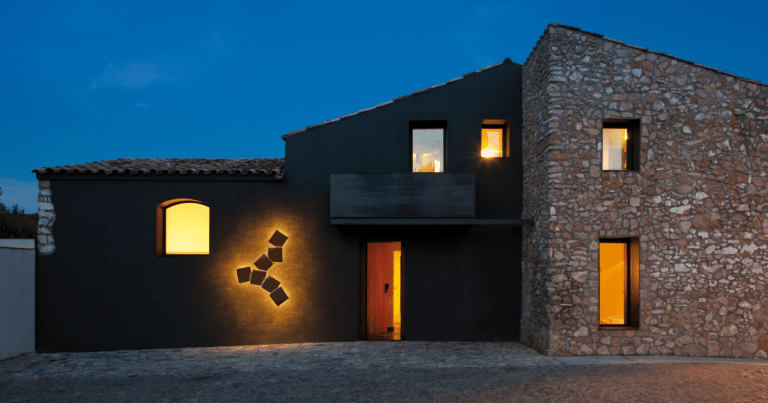
Modular light sconces are designed to decorate a wall with customized compositions in a variety of illuminated shapes. With a block-shaped modular lighting collection, each piece can be rotated at will, creating an unexpected juxtaposition of highlights and shadows while preventing unnecessary glare. Whether positioned close together in an intimate, small space, or farther apart in larger interiors, such a lighting design can achieve a spirited, yet decorative presence.

A subtle cluster or arrangement of wall sconces can add textural character to a room, especially when using masterfully crafted blown glass. Glassblowing is an ancient, organic process and imperfect by nature, making each individual creation unique in appearance with its own refractive properties. Light interacts with these irregularities, creating a visually rich halo of light and an enchanting arrangement when clustered together.

Pairing wood and metal can add a natural, organic feel to wall lighting design. With a disc-shaped fixture that sits slightly off the wall, a hidden light radiates behind the configuration, creating an aura of warm, indirect light without casting heavy shadows or harsh glares. On the opposite side of the shape spectrum, a minimalist, cubic collection of wall lights can be composed in a bold, geometric formation that quickly becomes a room’s focal point.
No matter what shapes compose the wall light design, selecting neutral-colored fixtures that blend into the wall behind them can create an entirely captivating effect, produced by the unexpected texture of the protruding elements and the personalized, ever-changeable play of light and shadow that results.
Sculptural & Artistic Pendants


Less modular than decorative wall lights, the right pendant fixture can be just the piece that adds a sense of artistry to interior and even outdoor spaces. Whether the fixture calls upon a particular epoch, or it’s the careful use of artisan-crafted materials that catch and hold the eye, a sculptural, well-designed pendant light moves beyond mere function and settles into a class of artistic lighting all its own.

While a warm glow can set the mood, a pendant light can set the tone, whether lit or unlit. Some might even say that an artistic pendant performs double duty: Serving as a work of art from morning till night, becoming a luminaire only when necessary.

Showing itself in its best light by design, the point, or points, of illumination are strategically placed by the designer to call attention to the fixture’s beauty. Whether focus is placed on a rich, bronze finish or an elusive sparkle created by crystal, the hanging fixture will suspend the imagination much like a great work of art hanging in a grand hall.
And like those great works of art and the artists who created them, lighting designers call upon their own artistic influences, as well. From Baroque and Impressionism to Cubism and Avant-garde, the design of a pendant light might reference any number of historical art movements, endowing these artistic fixtures with a certain magical quality that pays tribute to the past while illuminating the present.
Choosing an Artistic Fixture as a Focal Point
Designers treat an artistic fixture the way a curator treats a gallery wall: one commanding piece, given room to register. A few principles keep a statement fixture reading as a focal point rather than clutter.
- Scale to the plane. Match the fixture’s mass to the wall or ceiling that holds it, so it commands the sightline without crowding it.
- Limit the heroes. Let one sculptural piece lead per sightline, and keep surrounding fixtures quiet so nothing competes.
- Choose the finish deliberately. Neutral finishes recede into the architecture, while bold or metallic finishes anchor and draw the eye.
- Layer the light. Pair the statement fixture with ambient and task sources, so the room stays functional and the hero stays decorative.
- Judge it unlit. Assess the piece as a daytime object first, since an artistic fixture earns its place whether or not it is switched on.
Frequently Asked Questions
What counts as an artistic or sculptural light fixture?
An artistic fixture works as an object first and a light source second. It reads as sculpture when unlit, uses expressive materials like hand-blown glass or patinated metal, and often references a historical art movement. Function remains, though form and provenance carry equal weight.
What is the best lighting for wall art?
Wall art calls for controlled, indirect illumination that reveals the piece without glare or hotspots. Accent and picture lights, along with sconces that wash the surface evenly, protect the work and its colors. For fixtures that are themselves the art, neutral finishes let the play of light and shadow do the work.
How do I choose a statement fixture as a focal point?
Start with scale, matching the fixture’s mass to the wall or ceiling that holds it. Limit each sightline to one hero, then layer ambient and task light around it so the room stays functional. A fixture that holds up as a daytime object, switched off, tends to anchor a space best.
What are the four types of lighting fixtures?
Designers generally group lighting into four layers: ambient, task, accent, and decorative. Ambient light provides general illumination, task light focuses where work happens, and accent light highlights art or architecture. Decorative fixtures, like the sculptural pieces here, stand as objects in their own right.
An artistic fixture earns its place twice: as a working light and as a piece worth looking at. Whether it is a modular composition of sconces reading across a wall, or a sculptural pendant that references a movement in art history, the best of these fixtures shape a room’s atmosphere while standing as objects in their own right. Recognizing that dual role, scaling the piece to its space, and giving it room to lead is how a light becomes art at home. The makers gathered here make the case.