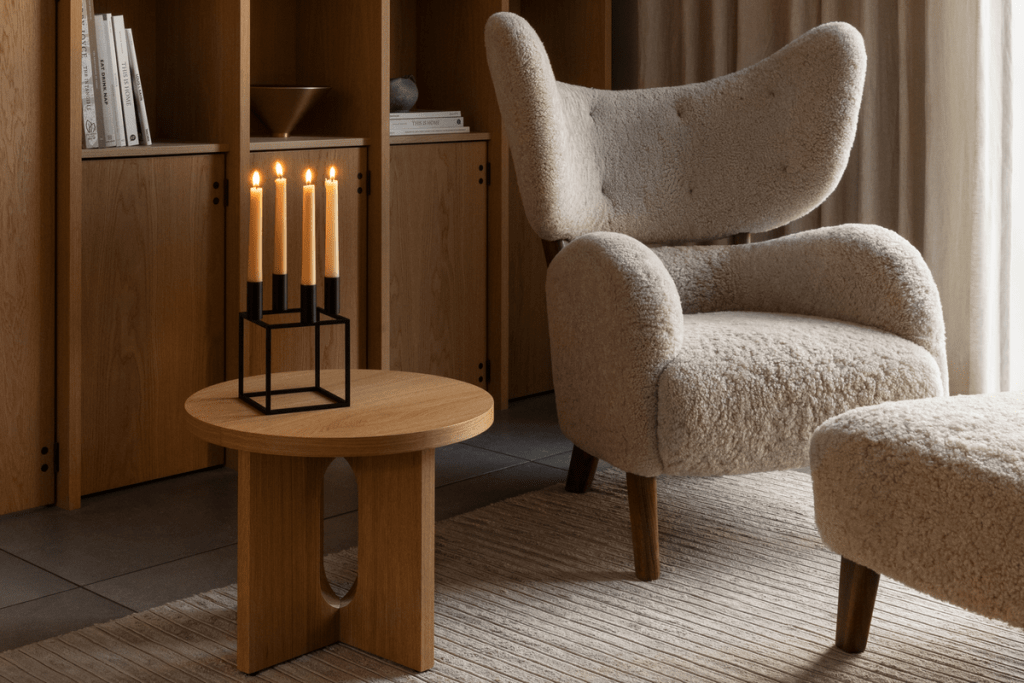
Transform your bedroom into a serene, stylish retreat with the perfect lighting plan. Discover expert strategies for ambient, task, and accent lighting, and shop designer fixtures at Lumens.

Elevate Your Bedroom with Thoughtful Lighting
Your bedroom should be a haven, a place to unwind, recharge, and find comfort. As warm minimalism continues to shape interiors in 2026, with its emphasis on biophilic materials, sculptural forms, and soft natural textures, lighting plays a defining role in a bedroom’s character. Thoughtfully layered lighting is the foundation of a room that feels as good as it looks. By combining ambient, task, and accent lighting, and choosing the right bulbs and controls, you can transform both the look and feel of your modern bedroom.
This guide will walk you through key bedroom lighting techniques, expert designer tips, and product recommendations, so you can create a well-lit, beautiful, and functional space.
Quick Tips for Modern Bedroom Lighting:
- Layer your light. Combine ambient, task, and accent sources so you can shift the mood from bright and productive to soft and restful with a single switch.
- Install dimmers on every fixture you can. They give you precise control over every lighting layer, shifting a room from bright and functional to soft and restful without changing a single bulb.
- Choose warm white bulbs (2700K to 3000K) for bedside and ambient fixtures. Reserve cooler temperatures for dedicated task areas like a reading nook or desk.
- In smaller bedrooms, think vertically. Wall-mounted sconces, hanging pendants, and LED strips free up floor and nightstand space while still delivering full, layered illumination.
The Art of Layered Bedroom Lighting
Effective lighting design starts with layering. Each layer, ambient, task, and accent, serves a unique purpose, allowing you to set the perfect mood for any activity with just the flick of a switch.
Ambient Lighting: Set the Stage

Lora Pendant by Lorenzo Radaelli and Carmina Mini Table Lamp by Soren Ravn Christensen, Anders Klem for UMAGE
Ambient lighting, your room’s general illumination, lays the foundation for comfort and functionality. Natural light from windows is ideal, but after sunset, rely on fixtures like ceiling lights, chandeliers, pendant lights, and flush mounts to brighten up the entire space. Portable floor lamps also contribute to a welcoming glow, perfect for everyday tasks like making the bed or tidying up.
Your ceiling fixture is often the single biggest lighting decision in a bedroom, and the right choice depends on the room’s proportions. In rooms with standard 8-foot ceilings, a flush mount keeps the profile clean and unobtrusive. For 9-foot ceilings, a semi-flush fixture introduces a touch of dimension without overwhelming the space. In bedrooms with 10-foot ceilings or higher, a chandelier or oversized pendant can serve as a true focal point. As a general guideline for sizing, add the room’s length and width in feet, then convert that number to inches for the fixture’s approximate diameter.
A 12-by-14-foot bedroom, for example, calls for a fixture roughly 26 inches across.
Task Lighting: Focus Where You Need It
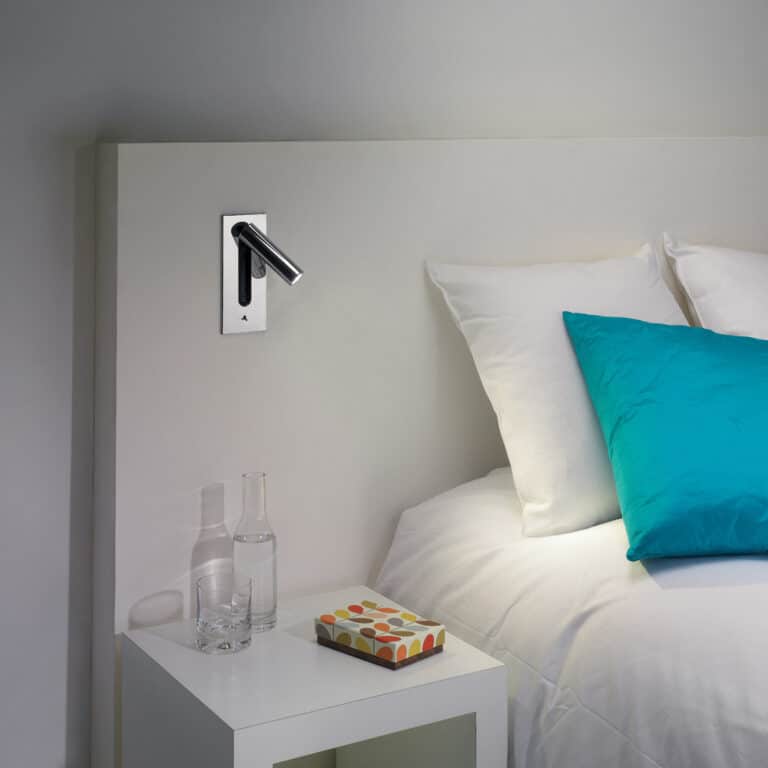
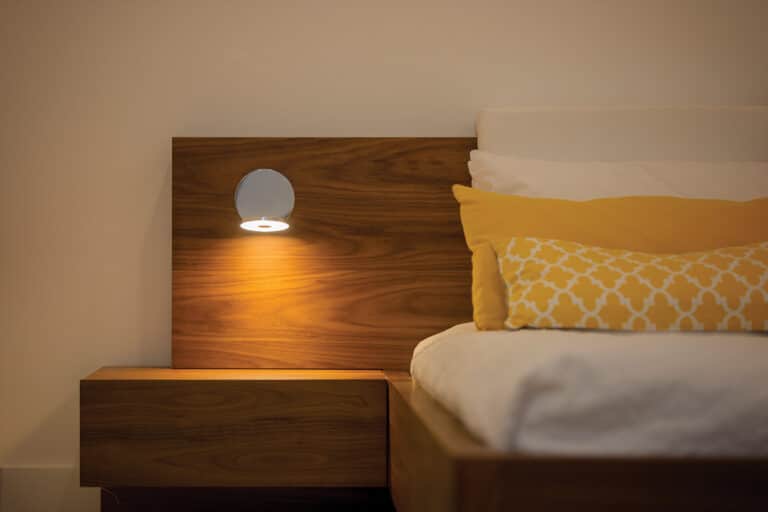
Need to read, work, or get ready? Enhance your ambient lighting with targeted task lighting. Table lamps with light shades offer ideal brightness for reading, while swing-arm lamps or adjustable sconces bring flexibility to either side of the bed. For a contemporary twist, try hanging pendants over your nightstands to save space and add style. In smaller bedrooms especially, wall-mounted task lights are a smart strategy: they free up valuable nightstand surface area while delivering focused, adjustable illumination right where you need it.
Accent Lighting: Add Depth & Drama
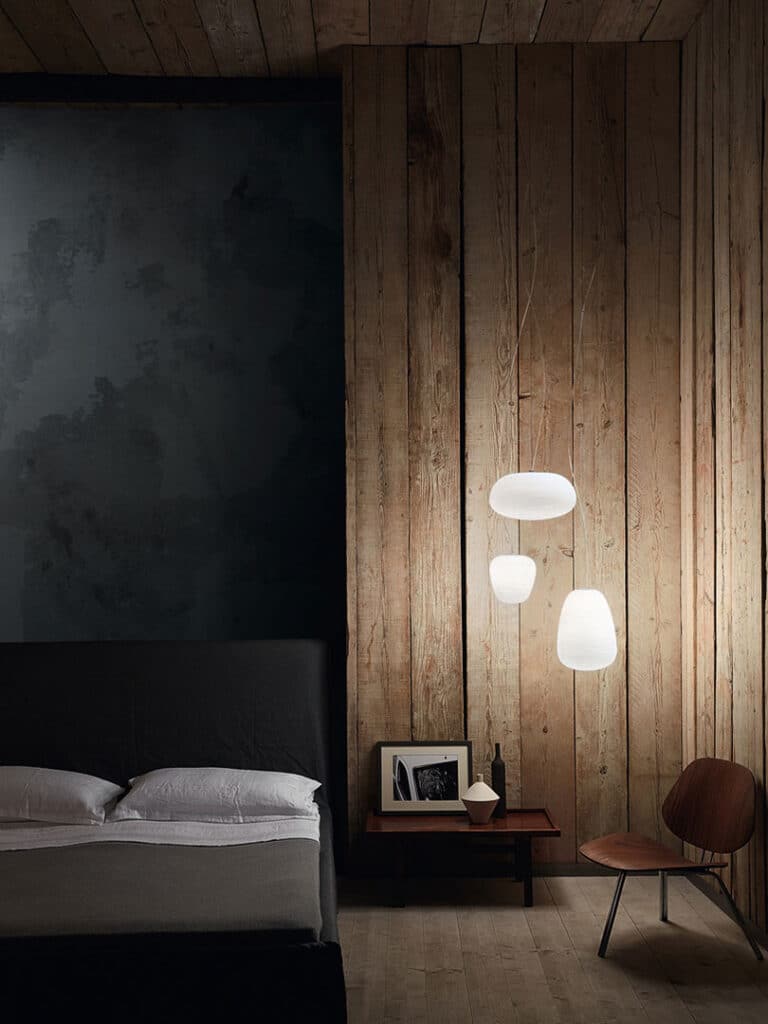
Rituals Collection by Ludovica e Roberto Palomba for Foscarini
ccent lighting draws the eye and highlights your bedroom’s best features, like artwork or architectural details. Use recessed lighting, wall sconces, or LED tape lights to add subtle glow and create a cozy, layered effect. LED strip and tape lighting has become one of the most versatile accent techniques in modern bedroom design. Applied beneath a bed frame, it creates a floating, grounded glow that softens the room at night. Run behind a headboard or along a shelf, it adds architectural dimension without requiring a single new fixture mount. Cove lighting along the ceiling perimeter produces a wash of indirect light that makes a room feel larger and more refined. Today’s LED strips are available in tunable white and color-changing options, allowing you to shift the atmosphere from warm and restful to focused and bright, and they consume a fraction of the energy of traditional accent fixtures.
Dimmers for Versatility & Ambience
Proper lighting/dimmers are important, because if there’s only one bright light source, it’s hard to transition into a relaxed sleep-mode. [With a] bedside lamp or sconce, you can ease into sleep or wake more gradually.Dimmer switches let you tailor the mood, from bright and energetic to soft and relaxing. Install dimmers on bedside and main fixtures for the most flexibility. Be sure to pair dimmers with compatible bulbs to avoid flickering or buzzing (see below for bulb tips).
— Leah Harmatz, Owner & Designer for Field Theory
Choosing the Best Bulbs for Bedroom Lighting
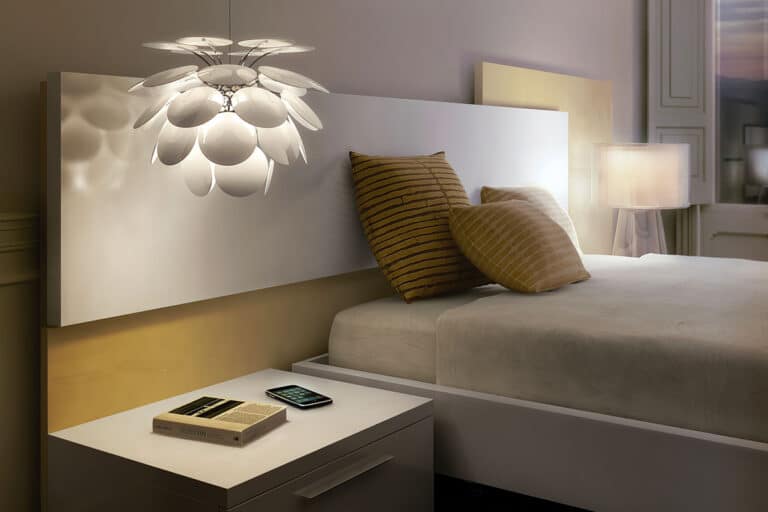
Discoco Pendant by Christophe Mathieu and Mercer Table Lamp by Javier M. Borras, Joan Gaspar for Marset
Brightness
For most bedrooms, aim for a total of 2,000 to 4,000 lumens. Adjust based on your preferences and the size of your space. Ensure your chosen light bulbs are dimmable if you want smooth, adjustable illumination.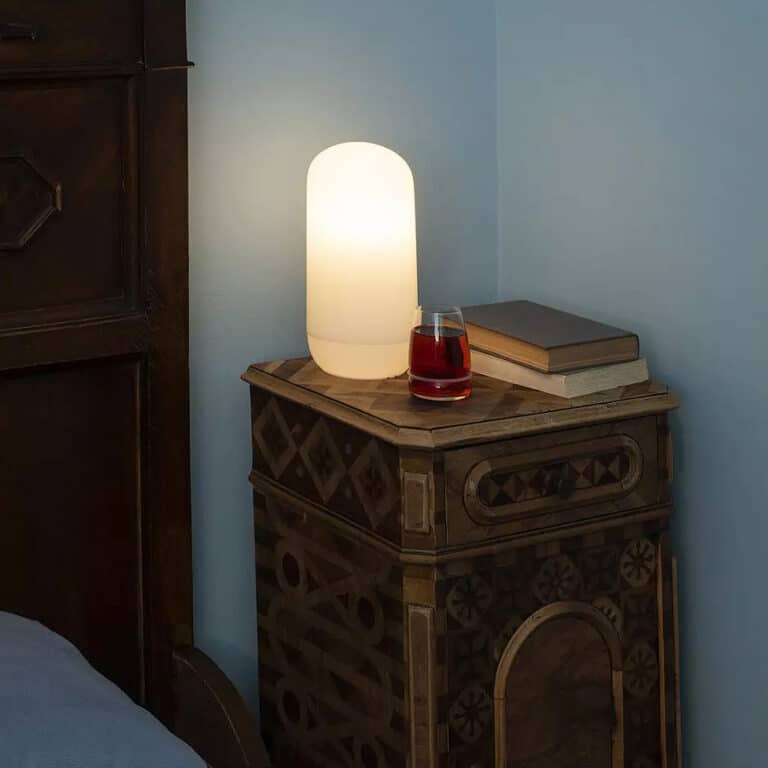
Gople LED Rechargeable Table Lamp by Bjarke Ingels Group for Artemide
Color
Cool white or blue tones (4000K+): Boost alertness, great for task lighting or desk lamps.
Warm white or yellow tones (2700K to 3000K): Encourage relaxation, ideal for bedside, ambient, or accent lighting.
Pick warmer lights for winding down and cooler lights for tasks that require focus. One advancement worth noting: “tunable white” and “warm dim” LED bulbs are now widely available. These bulbs let you shift color temperature from a single fixture, moving from an energizing daylight tone during the morning to a warm, calming glow at bedtime, all without swapping a bulb or adding a second lamp.
Expert Bedroom Lighting Tips with Interior Designer, Jamie Bush
Now that we’ve covered the basics of layering your lighting, it’s time to delve a little deeper into crafting your bedroom lighting with the expert advice of Jamie Bush.
How Do You Develop a Modern Bedroom Lighting Plan?
Jamie Bush: I’m trained as an architect, so we start with a furniture floor plan and measure everything out, down to where the plugs go. If there’s art on the wall, we install ceiling spotlights, set 2 feet in from the wall if it’s a standard 8-foot ceiling, or farther in if the ceiling is taller. You want the light to hit at eye level, where artwork hangs. If we use a pendant or a semi-flush ceiling fixture, it’s usually centered in the room, often over the bed. So, we try not to hang it too low, typically 8 to 12 inches from the ceiling. I like to use fairly large fixtures, my philosophy is that fewer, larger elements in modern design makes a larger impact. I don’t use many small or standardized sizes. To me they seem to lay flat, or look like tchotchkes. I prefer things with presence and size and scale.
Is symmetry important with bedroom lighting?
JB: No. But balancing and layering the light is. I like multiple types of fixtures. For example, I might place a floor lamp next to a lounge chair, table lamps on either side of the bed, and a decorative fixture on a dresser. I always try to have something with a shade to give a general warm glow. Also, some source of indirect lighting—light bouncing off something—whether sconces that throw light back on wall, cove lighting that grazes the ceiling or an architectural feature, or picture lights or spots for artwork. The goal is to bring your eye around the entire room, not just to focus on the bed. Bringing light to different corners makes a space feel bigger and balanced. The goal isn’t an evenly lit room, but an interestingly lit one, so your eye travels from fixture to fixture.
For great overall ambience I’d use a combination of the following fixture types: I’d put a floor lamp next to a lounge chair in a corner, and hang a pendant light about 18 to 24 inches from the ceiling as a statement piece. I’d complement those with a pair of bedside table lamps.
Nowadays, Many Bedrooms Are More Than Just Places to Sleep. How Can Lighting Help Accommodate All These Activities in a Single Room?
JB: The key is creating flexibility, and the ability to control light levels, so if someone wants to sleep and someone wants to work, you can accommodate that. Instead of one big overhead light, use different lighting in each area. At a desk, use task lights as well as a couple overhead pins to illuminate the whole space; that way you have options.
What Should One Look for When Choosing Bedside Lighting?
JB: If your reading light is a table lamp, make sure you pick a shade with a light tone. A black or dark gray shade might look striking, but if it doesn’t glow with light you can’t read by it. If you’re a serious reader, opt for a swing-arm task light that’s adjustable both vertically and horizontally for maximum flexibility. But if you don’t read much, or you only read on an iPad, sharp light is less critical, so you might want something more sculptural, like a glowing blown-glass fixture. The soft glow at night would be soothing and incredibly warm.
What Are Good Alternatives to Table Lamps for Bedside Lighting?
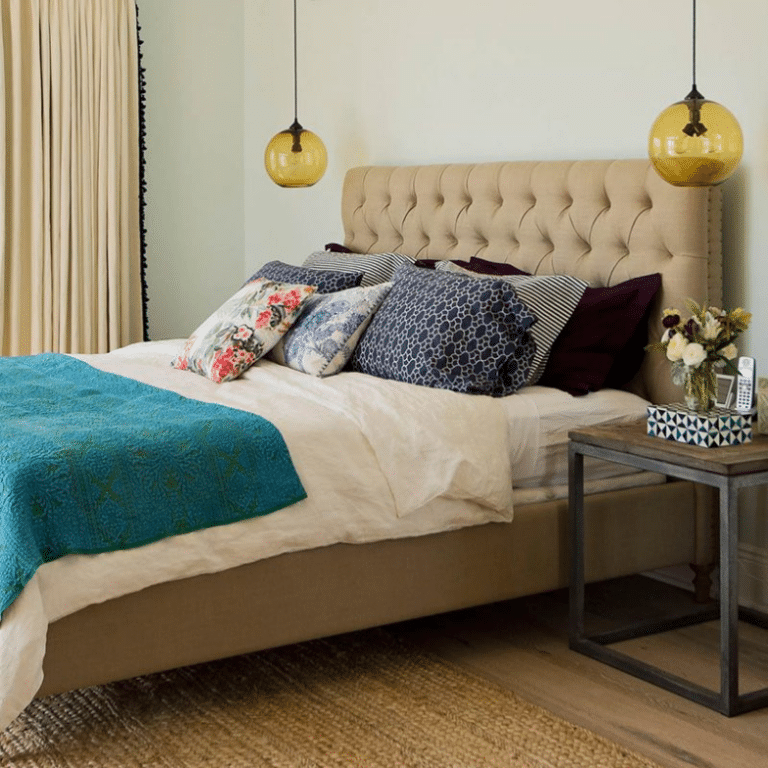
JB: Sometimes we’ll hang pendants over bedside tables, they’re a good option, especially for smaller rooms, because they don’t take up space on the table. It’s more for mood lighting than reading, though.Anything People Should Make Sure to Avoid When Lighting a Bedroom?
JB: Installing only overhead cans, or too many, is a common mistake. It flattens everything out, there’s no dimension, and it’s unflattering, you look older and more saggy.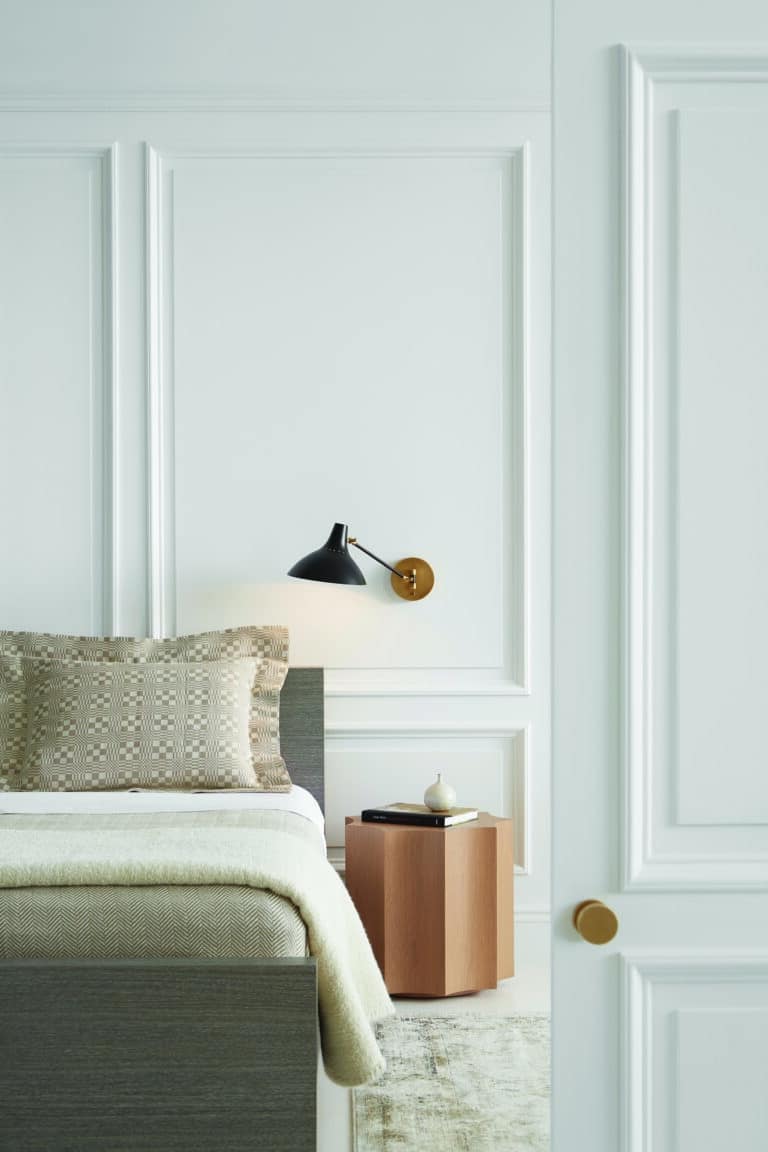
Charlton Wall Sconce by AERIN for Visual Comfort Signature
What About Sconces in the Bedroom?
JB: I like swing-arm sconces for reading. Sometimes I’ll use one sconce to flank a doorway or an architectural feature, like a wall between two windows. They can be used along a hallway leading from bedroom to bathroom. A more sculptural sconce can stand alone as a strong design element in a room.How Would You Incorporate Modern Lighting into a More Traditional Bedroom?
JB: It’s all about the mix. You have two options: Either pick one big statement piece, a contemporary fixture in the center of a room that has scale and presence and is clearly an anomaly, the thing that breaks the rule. Or, introduce several modern fixtures to create a rhythm and train the eye that it’s an intentional move to introduce this new design language, and not a mistake or lonely leftover. Natural materials work best, those with texture and irregularity such as woods, alabaster, natural stones, metals with patina, and linen. Chrome and white glass can look cold in that type of setting.Frequently Asked Questions About Bedroom Lighting
How many lumens do you need for a bedroom?
Most bedrooms benefit from a total of 2,000 to 4,000 lumens spread across multiple fixtures. A single overhead source rarely provides this comfortably on its own, which is why layering ambient, task, and accent light is essential. Adjust the total up or down based on room size, ceiling height, and how much natural light the space receives during the day.
What is the best color temperature for bedroom lighting?
For ambient and bedside fixtures, warm white in the 2700K to 3000K range creates a relaxing, inviting atmosphere. For a dedicated reading nook or desk area, a slightly cooler 3500K to 4000K supports focus and alertness. Tunable white LED bulbs offer the best of both worlds, shifting temperature to match the time of day or activity.
How do you light a bedroom without overhead lights?
Many bedrooms, particularly in older homes and apartments, lack a wired ceiling outlet. The solution is to build your lighting plan from the perimeter inward. Floor lamps anchor corners with ambient glow, table lamps provide bedside task light, plug-in wall sconces add accent and reading light without hardwiring, and LED tape lights behind furniture or along shelves create architectural depth. The result can actually feel more layered and intentional than a single ceiling fixture.
What are common mistakes with bedroom lighting?
The most frequent error is relying on overhead recessed cans as the sole light source. As designer Jamie Bush notes, too many overhead cans “flatten everything out” and eliminate the dimension that makes a room feel inviting. Other common missteps include choosing bulbs that are too cool for a restful environment, skipping dimmers, and neglecting accent lighting that draws the eye around the room rather than concentrating it in one spot.