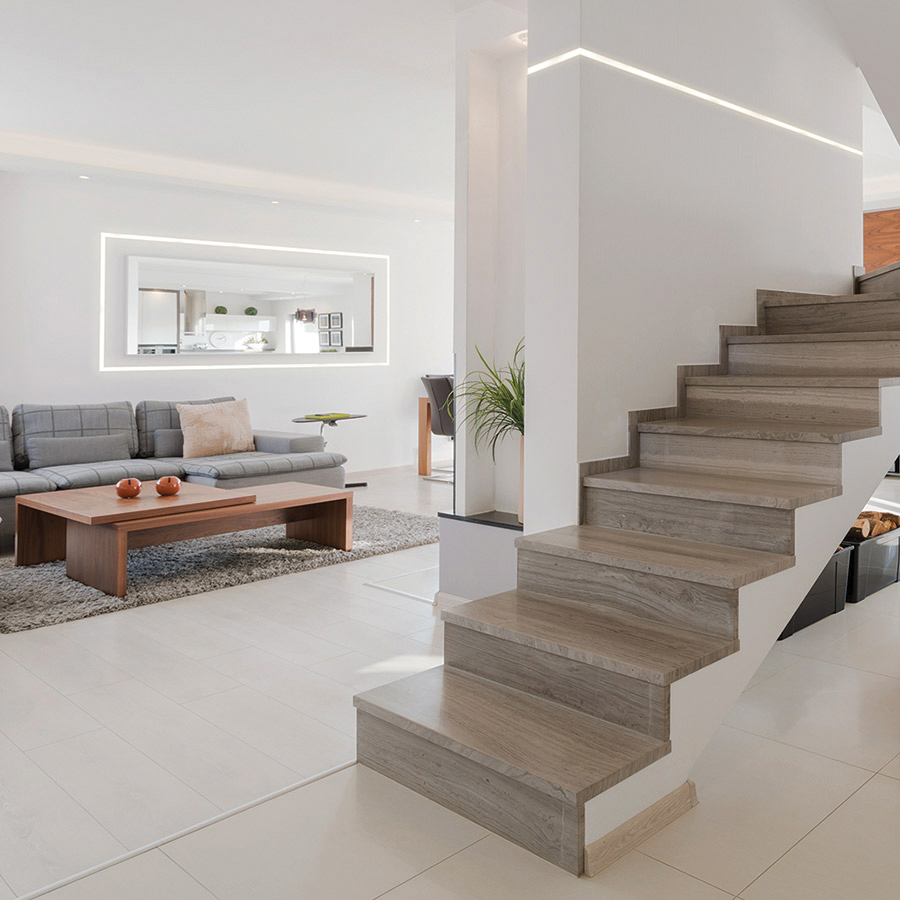
Discover how to select the perfect recessed lighting—also known as high hats—for every space in your home or business.
From ambient illumination to statement-making trims, this comprehensive buyer’s guide from Lumens walks you through everything you need to know to make your project shine.
Why Choose Recessed Lighting?
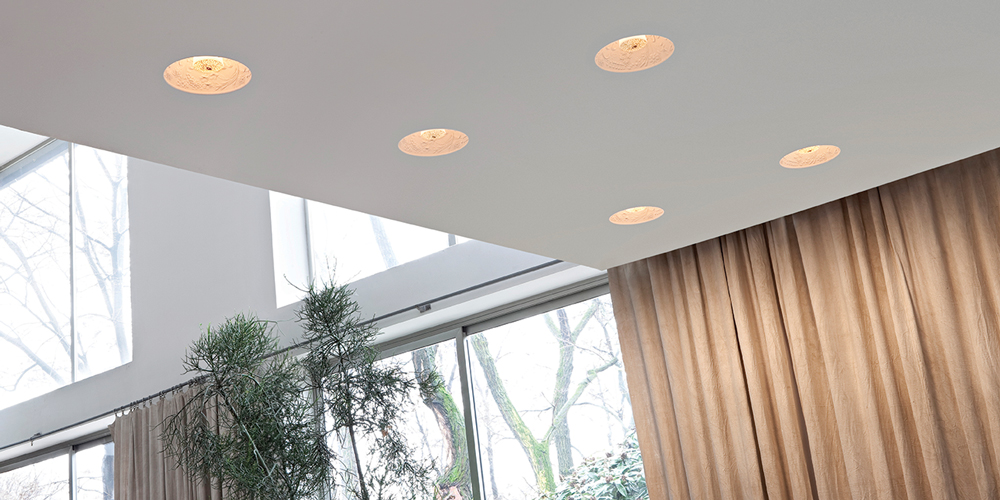
Recessed lighting offers a sleek, unobtrusive way to brighten any room. Whether you’re looking for general lighting, accent lighting to highlight art or architecture, or specialized solutions for bathrooms and outdoor areas, recessed fixtures deliver both functionality and style.
Types of Recessed Lighting
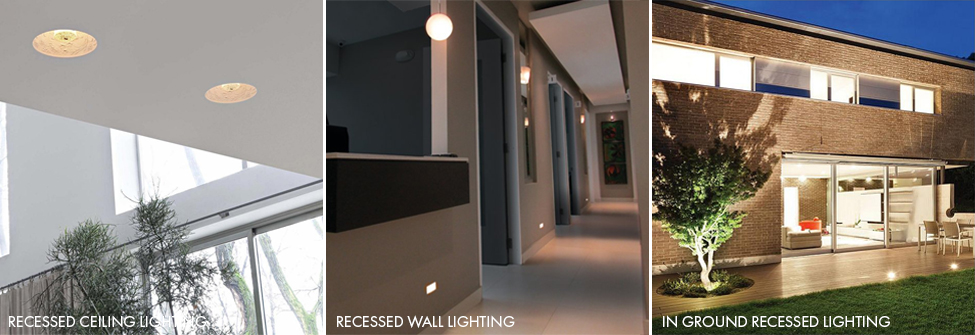
- Ceiling Downlights: The most popular option, perfect for living rooms, kitchens, and offices.
- Wall Recessed Lights: Ideal for stairways or hallways—use an angled flange to direct light onto steps or paths.
- In-Ground Fixtures: Best for outdoor pathways or highlighting landscaping features.
Find the right ceiling recessed lights or outdoor recessed lighting for your project.
Key Components: Housing & Trim
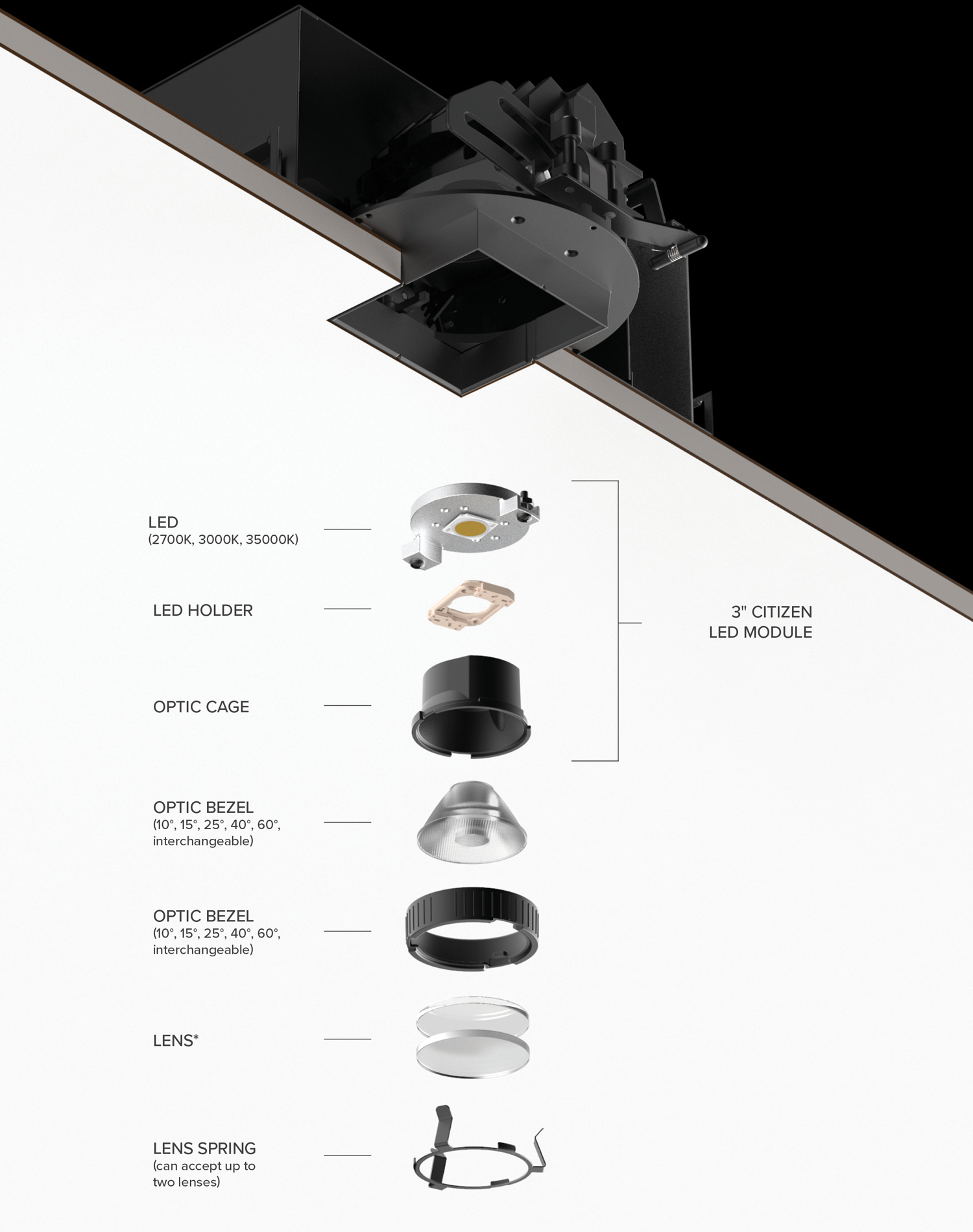
Every recessed fixture is made up of two parts:
- Housing: The structural element installed into the ceiling, wall, or ground. It contains the light source, mounting, and electrical connections.
- Trim: The visible component that defines the fixture’s look and helps shape the light beam.
Pro Tip: Always confirm housing and trim compatibility. Even trims and housings from the same manufacturer might not work together. When in doubt, connect with a Lumens lighting expert.
Trims and housing are sized to correlate with one another, so make sure you’ve got a match when purchasing both together. But just because a trim and housing are the same size, it does not mean that they work together. Even trims and housings made by the same manufacturer may not be compatible. Always make sure that the components you choose are going to work together. Because there are many factors that determine whether components will work together, the best thing to do is contact a lighting expert, like the ALA-certified specialists at Lumens.
Choosing the Right Housing
Your installation type determines your housing:
 |  |  |
| New Construction New construction housings are specifically designed for locations with visible ceiling joists and without drywall–usually that’s new construction, but these can be used for remodels if you’re gutting the space. | Remodel If joists are not exposed, or if you want to upgrade your current system to LED, a remodel housing is appropriate. These housings are installed through a small opening in the ceiling and held in place with clips. | Retrofit You may also consider a retrofit housing, arguably the most economical option. An existing trim is removed from its housing, and the retrofit is attached to the housing with clips. |
Know the codes and requirements in your area when building or remodeling. If you’re the one purchasing lighting for your project, make sure to clear it with your contractor, architect or Lumens lighting specialist to ensure that your choice will pass code in your area.
When and Where to Use Recessed Lighting
- Ambient Lighting: Brighten high-traffic areas like kitchens and living rooms.
- Accent or Spot Lighting: Highlight artwork, architectural details, or a fireplace. For art, a 30-degree angle minimizes glare.
- Wall Washing: Place fixtures near walls to softly illuminate and visually expand your space.
Selecting the Trim The right recessed lighting trim adds both style and function:
- Flangeless Trims: For a seamless, modern look.
- Flanged Trims: Make a bold statement.
- Square vs. Circular Apertures: Go square for contemporary spaces, circular for classic appeal.
- Bevel vs. Flat Trims: Beveled adds depth; flat is minimalist.
Functional Trims:
- Wet-Location Trims: Required for showers or saunas; shop wet-location trims.
- Adjustable Trims: Perfect for sloped ceilings or wall washing. Gimbal trims offer maximum aiming flexibility.
Reflector, Baffle, or Open Trims: Baffle trims reduce glare; reflectors maximize brightness.
Selecting the Lamp
Most modern recessed lights use integrated LEDs, but if you’re working with traditional or replaceable LED fixtures, consider:
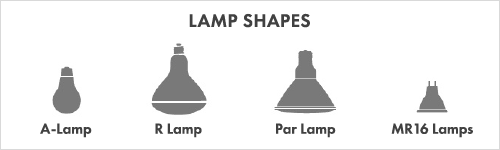
- A Lamps: All-purpose, balanced performance.
- R Lamps: Built-in reflectors for excellent beam control—great for spot or flood lighting.
- PAR Lamps: Long beams and wide spread—ideal for task and general lighting.
- MR16: Superior for accent lighting with precise control.
Basic Rules of Thumb for Downlighting Size and Spacing in Each Room
Each room is designed for a different purpose, so it follows suit that the size, lumens, color temperature and spacing will be slightly different so to provide ideal lighting in its best form.
| Living Room Low ambient light required | Kitchen High ambient light required | Dining Room Moderate ambient light required | Bathroom High ambient light required | Hallway Low ambient light required | Accent Lighting Low ambient light required |
| 2-inch – 3-inch trim size | 3-inch or 4-inch trim size | 2-inch – 4-inch trim size | 2-inch – 3.5-inch trim size | 2-inch – 3.5-inch trim size | 2-inch trim size |
| 400-800 Lumens per light | 700-1200 Lumens per light | 600-1000 Lumens per light | 700-1200 Lumens per light | 400-800 Lumens per light | 200-400 Lumens per light |
| 2700-3000K color temperature (match the temperature of existing task lighting) | 2700-3000K color temperature | 2700-3000K color temperature | 2700-3000K color temperature | 2700-3000K color temperature | 2700-3000K color temperature (match the temperature of existing task lighting) |
| Flood or narrow beam spread | Flood or narrow beam spread | Flood or narrow beam spread | Narrow or spot beam spread | Narrow or spot beam spread | Spot beam spread |
| 3’ to 4’ of space between each light | 2’ to 3’ of space between each light | 3’ to 4’ of space between each light | 2’ to 3’ of space between each light | 3’ to 4’ of space between each light | No specific space; adjust as needed |
| Open reflector, baffle or adjustable trims | Baffle, adjustable, multiple or open reflector trims | Open reflector, trimless or adjustable trims | Wet location trims | Open reflector, gimbal or adjustable trims | Open reflector or adjustable trims |
A Note on Voltage and Ratings
According to the National Electric Code (NEC), housings must be IC (insulation contact) rated if the housing is installed less than 3” from the location’s insulation. Non IC-rated housings are acceptable when they are installed 3” or more away from the insulation.
It’s important to determine the correct voltage for your housing. The most common voltage in America is 120V, though some commercial spaces use 277V, and international spots typically use 220V. Once the voltage has been determined, you can choose whether the housing will be line voltage, low voltage or integrated LED.
- Wired in 120V, line voltage housings are easy to maintain and have a lower upfront cost, although replacing old lamps and parts will add more cost in the long run.
- Low voltage housings offer 12V or 24V – while the voltage is lower, these housings provide greater control over the light color, quality and dimming.
- Integrated LED housings provide the most control over the light and dimming, they have low maintenance costs, and they are the most energy efficient. The biggest downside is that once the LED bulb goes out, the entire unit will have to be replaced.
Recessed Lighting Glossary
APERTURE: An opening or hole, specifically referring to the cutout on a recessed lighting trim where light is visible.
HOUSING: The protective safety covering around a recessed downlight.
IC RATED: IC stands for “Insulated Contact.” An IC rating is required for light fixtures that will be installed in direct contact with a building’s insulation material in the wall or ceiling.
TRIM: A decorative molding around the opening of a recessed light.
BAFFLE TRIM: A style of trim with large grooves that absorbs excess light and reduces glare. Baffles are typically available in black (which reduces the most glare) and white (which reduces the appearance of holes in the ceiling).
GIMBAL TRIM: A style of trim that allows control of the direction of light with a pivot inside the housing.
REFLECTOR TRIM: A style of trim that uses a smooth, polished interior to maximize the amount of light.